Blackjack Sites in New Zealand: Rules and Payments
 Available in US
Licensing, table rules, game formats and payment claims all affect how blackjack sites work for players in New Zealand.

Table of Contents
- How New Zealand’s Online Casino Framework Affects Blackjack Sites
- Compare Blackjack Sites by the Rules They Offer
- What Changes When You Play Live-Dealer Blackjack
- How Online RNG Blackjack Works
- Check Blackjack Payouts Before Playing for Real Money
- Card Counting and the Choices You Make at the Table
- How Blackjack Variants Change the Game
- PayPal Claims: What You Can and Cannot Verify
- Single-Deck Blackjack and the Rules to Check
- Bitcoin Blackjack: Verify the Payment Details Before You Play
How New Zealand’s Online Casino Framework Affects Blackjack Sites
The legal position of an online casino serving New Zealand has changed during 2026. The Online Casino Gambling Act 2026 took effect on 1 May, creating the country’s first domestic licensing system for online casino gambling. That change matters when you assess a blackjack site: being accessible to players in New Zealand and holding a New Zealand licence are not the same thing, particularly during the transition to the new regime.
The framework divides regulatory work between the Department of Internal Affairs and the Gambling Commission. The Department of Internal Affairs is New Zealand’s primary gambling regulator and oversees the online casino licensing framework. The Gambling Commission has decision-making responsibilities within that framework: it hears and determines casino licence applications, issues online casino licences and approves changes to licence conditions. These roles are connected, but they are not interchangeable. The Department oversees the system; the Commission makes decisions about applications and licence conditions.
What the transition means
The Gambling Act 2003 did not permit online casinos to be based in New Zealand. Before the new legislation, online casino gambling supplied from outside the country was not licensed or supervised by a New Zealand regulator. A customer wagering with an offshore website during that period had no domestic government recourse. The 2026 Act changes the regulatory structure by establishing a route to domestic licensing; it does not mean every site previously available to New Zealanders immediately became locally licensed.
Choosing a blackjack site in New Zealand calls for checking the information available about each operator before you decide where to play. Use these concise verdicts as a starting point for your own review.
License: 07017519840 · Payout speed: 1-3 business days You can note Zotabet’s listed licence number, 07017519840, and its stated payout speed of 1–3 business days.
Payout speed: 1-3 business days Lamabet lists a payout speed of 1–3 business days, a useful detail for you to consider when reviewing the site.
License: Tobique Gaming Commission, licence no. 0000002 You can check Ricky Casino’s stated licence from the Tobique Gaming Commission, number 0000002.
License: Tobique Gaming Commission, licence no. 0000064 Neospin lists a Tobique Gaming Commission licence, number 0000064, for you to take into account.
License: Tobique Gaming Commission, licence no. 0000091 You can note 7Bit Casino’s stated Tobique Gaming Commission licence, number 0000091.
License: Malta Gaming Authority, licence no. MGA/B2C/370/2017 Play Grand lists a Malta Gaming Authority licence, number MGA/B2C/370/2017, as a detail for you to review.
Payout speed: 1-3 business days Wintino states a payout speed of 1–3 business days, which you can consider when assessing the operator.
License: Curaçao Gaming Authority, licence no. OGL/2024/165/0185 BitStarz lists a Curaçao Gaming Authority licence, number OGL/2024/165/0185, for you to check.
License: Malta Gaming Authority, licence no. MGA/B2C/394/2017 You can take account of N1 Casino’s stated Malta Gaming Authority licence, number MGA/B2C/394/2017.
The Act includes a transitional period from 1 May to 1 December 2026. Online casinos that were already providing services to people in New Zealand before 1 May may continue operating during that period, subject to the Act’s transitional provisions. This temporary permission is not the same as a full licence. Providers that have not applied for a licence must cease conducting online casino gambling in New Zealand by 1 December. If an application is declined, the provider must stop those operations and leave the market.
The distinction is important when you encounter a blackjack casino site during the transition. Continued availability may reflect transitional permission rather than a completed licence decision. Nor does the site’s presentation of itself as an online casino establish that the Gambling Commission has granted it a licence. The full licensed regime is not expected to be fully operational until 2027, so the framework is moving from a transitional stage towards a settled licensing system.
How applications and licence conditions fit together
An application is a formal matter for the Gambling Commission to hear and determine. The Commission’s role is not limited to receiving paperwork: it decides casino licensing applications and is responsible for issuing licences. A provider’s position therefore depends on the application process and its outcome, not merely on whether its website can be reached from New Zealand.

Licence conditions are another part of that oversight. If conditions attached to a licence are to change, the Gambling Commission is responsible for approving the change. This means a licence is not simply a one-time label that an operator can alter on its own terms. The approved conditions form part of the regulatory arrangement, and proposed changes fall within the Commission’s decision-making role.
The Department of Internal Affairs’ oversight sits around this licensing process. As the primary regulator of gambling in New Zealand, it oversees the framework in which applications, licence decisions and condition changes operate. For a reader, the practical point is to distinguish the regulator that oversees the system from the Commission that handles the specified licensing decisions. Treating the two bodies as if they perform identical tasks obscures how the framework is organised.
Reading claims about New Zealand status
When a site describes itself as serving New Zealand, separate three questions: whether it is accessible, whether it falls within the transitional provisions, and whether it has obtained a licence under the new regime. Those questions concern different things. Access alone does not answer the licensing question, and a transitional basis for continued operation is not equivalent to a completed licence.
The new Act prohibits domestic online casinos under the earlier framework’s approach while establishing a licensing regime for online casino gambling. During the transition, eligible existing providers may continue under the Act’s provisions, but providers must meet the process and timing set by the regime. Unlicensed operation is expected to become an offence from around mid-2027. The transition should therefore be understood as a defined period of change, not as evidence that the licensing rules do not matter.
Unlicensed operation of online casinos is expected to become an offence from around mid-2027.
For blackjack sites in New Zealand in 2026, the relevant regulatory question is not whether a site uses a particular game format. It is how the provider fits into the New Zealand framework: whether it was already operating before the transition began, whether it has applied for a licence, and whether the Gambling Commission has made a decision. Those distinctions explain why availability, application status and a granted licence should not be treated as synonyms.
Compare Blackjack Sites by the Rules They Offer
A blackjack site can offer several games with different conditions, so the site name alone does not tell you how a particular table plays. Compare the rules shown for the specific game you intend to open. A specialist blackjack review reports that deck count, the dealer’s decision on soft 17, surrender rules and blackjack payouts can differ between games. Treat that as a reason to inspect each table’s own rules, not as proof that a particular site offers any specific set of conditions.
Read the table rules as a set
Start with deck count, but do not judge a game on that detail alone. Check whether the dealer hits or stands on soft 17: this refers to a dealer hand containing an ace counted as 11 without taking the hand above 21. The rule changes what happens when the dealer has that hand, and therefore affects the conditions under which you play.
Next, look for surrender and note when it is permitted. If the option is available, it gives you a choice that is not present at tables without it. Do not assume that a familiar game title means familiar rules; the written rules for the selected table are the relevant reference.

Then check the stated payout for a natural blackjack. Payout terms are one of the conditions that can vary, so compare the figures in the game information rather than relying on a general description of blackjack. The payout deserves its own close check before you stake money; a brief label in a lobby may not show the full rule set.
These details interact. A table with one rule does not automatically have more favourable conditions overall, because the other rules may differ too. The practical comparison is between complete rule sets, not isolated labels such as “single deck” or “surrender available.” Blackjack variants also change rules, and those differences can alter strategy and the house edge. Avoid transferring decisions from one version to another without checking what has changed.
Find the rules before you play
Open the game’s information panel or rules page and confirm that it describes the exact table you selected. If a listing gives only a game name, look for the detailed rules in the game itself. Record the conditions that matter to you in a simple comparison: deck count, soft-17 decision, surrender availability and payout. If any item is unclear, do not fill the gap with an assumption.
This method works whether you are comparing browser-based blackjack websites or looking for a table that opens in a particular setting. A page being accessible, including one described as an unblocked blackjack site, says nothing about its table rules. Access and game conditions are separate questions.
- Inspect each table’s own rules
- Open the game’s information panel
- Compare complete rule sets
- Verify rules when switching tables
- Rely on a general site description
- Assume a game title implies familiar rules
- Judge a game on deck count alone
- Fill unclear information with assumptions
Do not treat a site-wide description as a substitute for table-specific information. A lobby may group several blackjack games together, while their rules differ. Check again if you switch tables, since the conditions you verified for one game may not apply to another.
Before playing for real money, read the fine print and any bonus conditions on trustworthy sites and casinos. Blackjack may contribute differently to wagering requirements, and maximum-bet rules may apply while wagering. Those terms are separate from the blackjack table rules, but they can affect how you use a bonus. Set a budget before you start and do not chase losses; changing tables cannot remove the risk of losing money.
What Changes When You Play Live-Dealer Blackjack
Live-dealer blackjack is played with actual cards handled at a casino table and shown through a video stream. That makes the game feel closer to sitting across from a dealer than playing a screen-based version: the cards are physically dealt, and you follow the hand as it unfolds on camera. The stream is part of the game’s operation, not just decoration. What you see depends on the video reaching your device, so play can feel less immediate than the dealer’s actions at the table.
A streaming delay can affect the pace you experience. The dealer may have completed an action before it appears on your screen, or the picture may pause briefly while the stream catches up. This does not mean the cards are being dealt differently for you; it means the video and your view of the game are not perfectly simultaneous. If you prefer a steady, quick rhythm, interruptions or lag can make a live table feel slow. A stable connection helps, but it cannot guarantee that every stream will be uninterrupted.
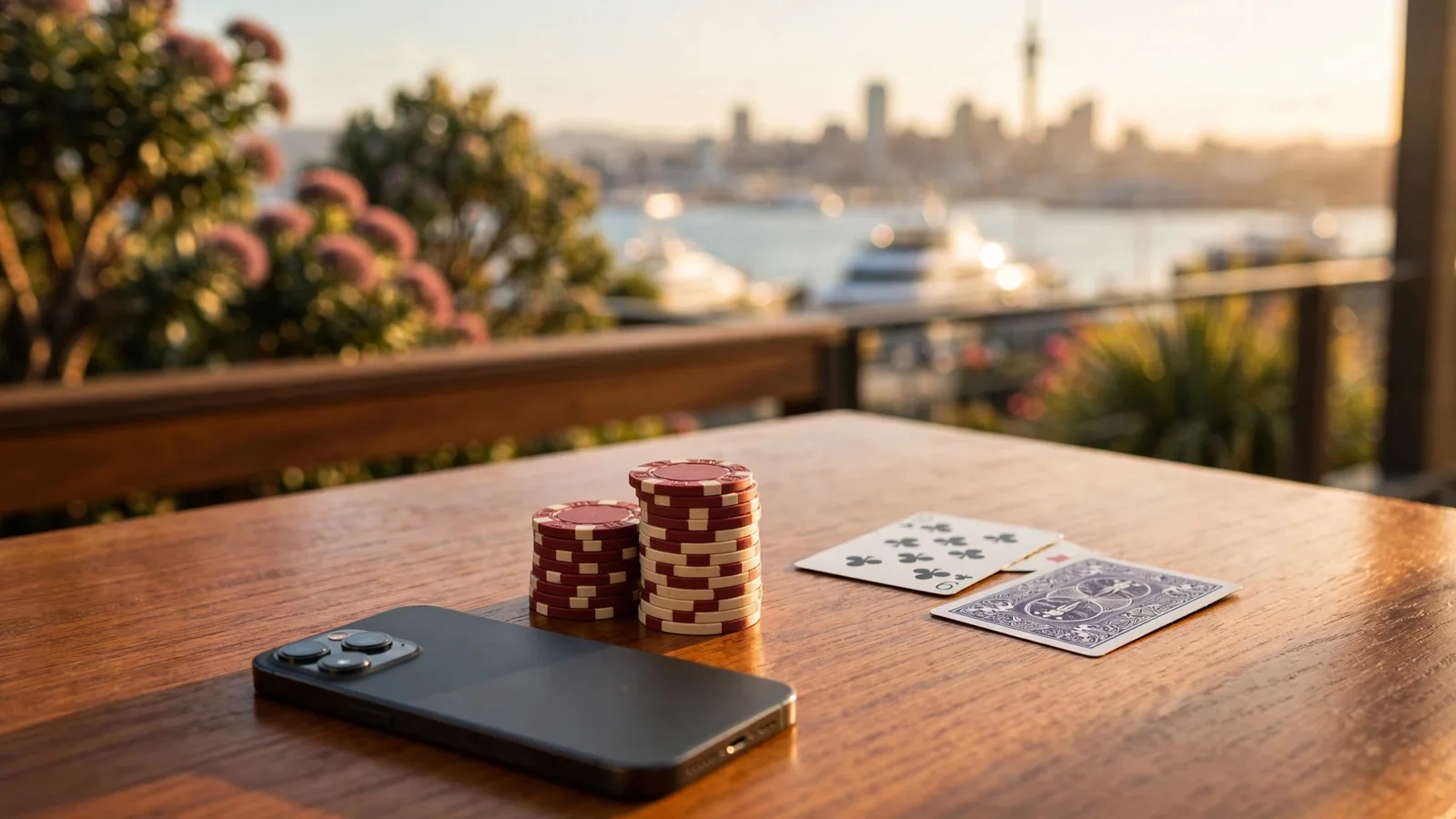
The decision process also has two visible parts: the dealer’s actions at the physical table and your choices through the game interface. You watch the cards arrive, then use the available controls to make your move. Because the round is presented as a shared table event, it may feel more social and tangible than a game that displays only software-generated graphics. The trade-off is that the pace depends partly on the live table and the stream, rather than only on how quickly you make decisions.
Betting conditions can be another practical difference. Live tables may require higher minimum bets than you are prepared to stake. A minimum is the lowest permitted wager for that table; it is not a recommendation to bet more. Before joining, check the amount shown for the specific table and decide whether it fits your budget. If it does not, choosing a different table or not playing is more sensible than raising your stake to gain access.
There is no single answer to what makes a live blackjack site the right choice for you. A useful comparison starts with the experience you want: a physical dealer and cards on camera, a stream that works smoothly on your connection, and a table minimum you can accept. Then inspect the table information before committing to a hand. The title or promotional description alone cannot tell you whether the actual table will suit your preferences.
Joining a Live Table
- Evaluate the stream stability on your connection
- Check the specific table’s minimum bet
- Read the displayed rules for that table
- Review bonus fine print for wagering requirements
Keep the distinction between presentation and terms clear. Live video changes how the game is delivered, but it does not remove the need to check the conditions attached to the table. Read the displayed rules and bet limits, and do not assume that every live table offered by a site works the same way. If you are using a bonus, read its fine print too: blackjack may contribute differently to wagering requirements, and maximum-bet rules may apply while wagering. Set a budget before you start and do not chase losses.
The main choice is therefore not simply “live or not live.” It is whether the physical-card presentation is worth the possible wait and whether the table’s minimum fits your planned stake. Once those conditions are clear, you can judge the live format on its actual trade-offs rather than on the appearance of the stream alone.
How Online RNG Blackjack Works
Online RNG blackjack uses software to shuffle the cards rather than a live dealer handling a physical deck. The game presents the resulting cards on screen, and you make your decisions through the interface. The software then advances play, so you do not need to wait for a dealer to deal and collect cards in real time. This is why RNG games allow faster play than live-dealer blackjack.
The distinction is about how the game is operated, not whether you are playing blackjack. The familiar objective remains: play against the dealer and try to finish closer to 21 without going over. You can choose actions such as hitting, standing, doubling down or splitting when the game offers them. The screen communicates the cards and the available choices; the software handles the shuffle and the progression of the game.
A faster pace changes how much time you have between decisions. In a live game, the dealer’s actions and the streamed table set the pace. In an RNG game, the software can move from one stage to the next without those physical steps. You may therefore complete rounds more quickly, but that does not mean each decision matters less. You still need to follow the hand and select an action before the game continues.

The software-based format also affects what you are observing. You see a digital presentation of the cards rather than a dealer’s physical handling of them. The shuffle is performed by the game software, not by a person at a table. That makes RNG blackjack distinct from a broadcast game, even when both use the same basic blackjack objective. The key difference is the source of the dealing process: software in one format, actual cards and a live dealer in the other.
When assessing a round, keep the game’s pace separate from its conditions. The faster format does not, by itself, tell you what choices are available or how a hand will be resolved. Those details are shown in the game’s rules and interface. Read the information provided before starting, then use the displayed options to make each decision. A quick sequence can make it easier to move through rounds without pausing, so take the time you need rather than treating speed as a reason to act automatically.
RNG blackjack is therefore a software-operated way to play the same broad game, with the shuffle and round progression handled digitally. Its main practical difference from live-dealer play is pace: without a streamed table and physical dealing, play can move faster. That format may suit you if you prefer to make decisions directly through a game interface, while a live table follows the timing of a dealer and a stream. Neither format changes the need to understand the screen and the choices presented before you act.
Check Blackjack Payouts Before Playing for Real Money
A blackjack payout is part of the game’s rules, not a detail you can safely infer from the table name. Before staking money, find the stated payout for a natural blackjack—the qualifying hand described by the game—and check that it applies to the table you intend to play. A general description of a site or game may not specify the terms of every table.
A specialist blackjack review reports that a natural blackjack can pay at a 3:2 ratio, while some tables pay 6:5. These are different terms: for the same stake, the 6:5 payout is lower than the 3:2 payout. The distinction affects what you receive when the qualifying hand occurs. It does not mean that every other winning hand is paid at the same ratio; check which hand the stated payout covers.
Before you play, look for the payout in the table information or the operator’s rules for that specific game. Confirm that you are reading the rule for the table you have opened, rather than a general page about blackjack. If the payout is not clearly stated, do not assume it is the more favourable ratio. You can choose a different table or clarify the terms with the operator before committing money.
This matters when you are comparing places to play for real money. A site-wide description cannot tell you whether a particular table pays 3:2 or 6:5. Nor does a table’s title, appearance or format establish its payout. Read the rule displayed for the game and make your decision using that stated term. A payout difference is one reason that calling a site “best” without checking the actual table conditions can be misleading.
Keep payout terms separate from promotions. If you plan to use a bonus, read its conditions before accepting it: blackjack may contribute differently to wagering requirements, and maximum-bet rules can apply while those requirements are active. A headline offer does not change the table’s stated blackjack payout, but its conditions can affect how play counts toward the offer.
The payout is only one part of the cost and risk of playing. Decide in advance how much you are prepared to spend, keep to that budget, and do not chase losses by increasing stakes after an unfavourable result. Avoid insurance as a bet if you are among most players. These decisions do not make a payout more favourable; they help keep the terms of play clear before money is at risk.
Card Counting and the Choices You Make at the Table
Card counting is a way of keeping a running estimate of which card values have already appeared. It does not change the value of any card or guarantee what will be dealt next. Its usefulness depends on whether the game gives you information about cards that remain in play.
In blackjack, number cards retain their face values, while each face card counts as ten. An ace can count as either one or eleven, depending on which value helps the hand without taking it over twenty-one. You play against the dealer, aiming to finish closer to twenty-one than the dealer without exceeding it.
Under New Zealand law, using mental calculation to count cards is not illegal.
Your decisions shape how your hand develops. You can hit to take another card or stand to keep your current total. You can double down or split when the table permits those actions and the hand meets its conditions. The choice is not just about the total in your hand: it also depends on the dealer’s visible card and the consequences of taking another card. Card counting, where possible, is one input to a decision, not a substitute for understanding the hand.
Under New Zealand law, using mental calculation to count cards is not illegal. That legal position does not mean every online blackjack format provides the conditions needed for counting. You need a meaningful sequence of dealt cards and a way to track what has appeared. If a game’s operation makes that sequence unavailable or repeatedly resets it, a running count cannot tell you much about the cards that may come next. The game format matters independently of whether the mental arithmetic itself is lawful.
Nor does a count predict a particular card or turn a losing hand into a winning one. It is an estimate based on cards already seen; uncertainty remains. Treating it as a guaranteed system can lead you to stake more than intended. Set a budget before playing, and do not chase losses. Avoid insurance as a bet if you are making ordinary playing decisions; it is a separate choice, not a way to improve a count.
If you use a bonus, read its terms before staking real money. Blackjack may contribute differently from other games toward wagering requirements, and maximum-bet rules may apply while wagering requirements are active. Those conditions affect how you can play with a bonus, not whether mental card counting is legal.
How Blackjack Variants Change the Game
A blackjack variant is not merely a different name for the same game. Its rules determine which decisions are available and how the dealer’s play interacts with your hand. Those differences can change the strategy that makes sense and affect the house edge—the built-in advantage the rules give the house over time.

The basic objective remains consistent: you play against the dealer and try to finish closer to 21 without going over. But the choices available to you can depend on the variant and its table rules. You may be able to hit, stand, double down, split, or surrender. If an action is unavailable, or its conditions differ, a strategy that assumes you can use it may no longer apply.
For instance, a decision to double down depends on being allowed to increase your stake in that situation. Splitting depends on whether the rules permit you to separate a pair into separate hands. Surrender, where offered, changes how you can respond to a hand you judge unfavourable. These are not interchangeable options: each affects what you can do next and the amount at risk.
The house edge also depends on the rules taken together, not on a variant’s label alone. A named version may sound familiar, but that does not tell you which decisions are permitted or how the dealer must play. Small rule differences can alter the value of a choice, so applying one general strategy across every version can lead you to make decisions on the wrong assumptions.
Blackjack Variants
- Variant rules determine available decisions and the house edge
- Strategy must be adjusted based on permitted actions like surrender or splitting
- Read the game’s own rules rather than relying on a title
- Review bonus terms alongside table rules before staking money
When comparing variants, read the game’s own rules before you start. Check the available player actions and the conditions attached to them, then consider whether the strategy you intend to use fits those conditions. This is more useful than relying on a title or a short description that leaves the mechanics unclear. The best place for you to play is not established by a ranking; you need enough rule information to understand the game you are entering.
If a site presents a variant alongside a bonus, read the bonus terms as well as the table rules before staking real money. Blackjack may count differently towards wagering requirements, and maximum-bet rules can apply while you meet them. Set a budget before play and do not chase losses. These precautions do not change the variant’s house edge, but they help keep the financial decisions separate from the game decisions.
PayPal Claims: What You Can and Cannot Verify
A page describing the best blackjack sites may imply that its recommendations have been checked for PayPal support. A ranking alone does not establish that. Payment options can be specific to an operator, account or location, and a general claim may not match the terms currently shown to a player in New Zealand. Do not treat a list of sites—or a PayPal logo in promotional material—as confirmation that you can use the service for blackjack.
Check the operator’s own current payment terms before creating an account or depositing. Look for an explicit statement that PayPal is available to New Zealand customers, then confirm whether it applies to casino deposits, withdrawals or both. A payment method appearing in one part of a site does not necessarily establish that it is available for every transaction. If the terms are unclear or conflict with the payment options displayed after sign-in, ask the operator to clarify before moving money.
Read the conditions attached to the payment method as well as the general account terms. Confirm how the operator describes processing, any fees, currency conversion and restrictions on withdrawals. These details should be stated by the operator; a third-party list may be out of date or may not distinguish between depositing and withdrawing. Do not infer PayPal availability from another operator’s policy or from a claim about a different country.
Promotional terms need a separate check. If you accept a bonus, read its wagering requirements and confirm how blackjack contributes towards them. Maximum bet rules may also apply while wagering requirements are active. A payment option does not make a bonus suitable for your plans, and bonus conditions can affect when funds may be withdrawn. Read the fine print before playing for real money, including the conditions attached to both the promotion and the payment method.
This approach is more reliable than relying on a supposed top-ten list: verify each operator’s current terms directly, and do not assume that a site accepts PayPal because another page says it does. If the payment terms do not clearly cover your location and the transaction you intend to make, treat availability as unconfirmed. Set a budget before playing and do not chase losses; payment convenience does not change the financial risk of gambling.
Single-Deck Blackjack and the Rules to Check
A single-deck blackjack table uses one deck of cards rather than several. That describes the deck count, not the full set of conditions for the game. Two tables using one deck can still differ in how the dealer handles a soft seventeen, whether surrender is available and what a natural blackjack pays. A specialist review notes that these conditions can vary between games, so the deck label alone cannot tell you how a table plays.
When you look for single-deck blackjack online, first confirm that the game’s rules actually specify one deck. Then read the other table conditions before you start. The dealer’s decision on soft seventeen matters because it affects what happens when the dealer has an ace counted as eleven alongside other cards totalling six. Surrender rules determine whether you can give up a hand in the situations the table permits. The payout terms tell you what a natural blackjack returns. Treat each as a separate rule to verify rather than assuming one follows from the deck count.
A single deck may sound simpler because there are fewer cards in use, but that does not establish that the table is better for you. Its overall conditions depend on the combination of rules, not on deck count by itself. If a game description highlights “single deck” but leaves other conditions unclear, the label is not enough to predict how play will work. Look for the rules attached to that specific game, and check that they match the table you are about to join.
This distinction is useful when browsing blackjack games available to players in New Zealand. A site may offer more than one blackjack table, and a general description of its casino does not confirm the rules of each one. Avoid treating a single-deck claim as proof of a favourable payout or a particular dealer decision. The relevant details are the stated rules for the exact table.
Before staking money, read the game rules and any applicable terms. Set a budget you can afford to lose, and do not chase losses. A careful check lets you identify what “single deck” means for that table without relying on a headline or assuming that every other rule is the same.
Bitcoin Blackjack: Verify the Payment Details Before You Play
A Bitcoin option should be treated as a payment method to verify, not as proof that a blackjack site is suitable or that a transaction will work in a particular way. Availability can differ between operators and may change, so check the site’s current cashier and terms before creating a payment plan.
Read the deposit and withdrawal conditions separately. Confirm whether Bitcoin is listed for both directions, whether the site states which network to use, and whether it explains transaction fees, processing steps and any conversion between cryptocurrency and the account balance. Check that the payment instructions shown at the time of a transaction match the site’s published terms. Do not send funds based on an old page, a search result or an address supplied outside the operator’s own payment process.
The displayed balance is also important. Establish whether blackjack stakes and winnings are recorded in Bitcoin or converted to another currency, and how the site describes the conversion rate. If the terms do not explain a point that affects the amount you expect to receive, pause and ask the operator before depositing. A payment option alone does not establish that withdrawals are available on the same terms as deposits.
If a bonus is involved, read its conditions before accepting it. Check how blackjack contributes to wagering requirements and whether maximum bet rules apply while those requirements are active. These conditions can affect whether playing blackjack advances a bonus and what restrictions apply to your stakes.
Keep payment decisions separate from gambling decisions. Set a budget before playing, use only money you can afford to lose, and do not increase stakes to recover losses. Bitcoin’s presence in a cashier does not change how blackjack works or make a wagering outcome predictable. Verify the current payment terms directly, then decide whether the stated conditions are acceptable before moving funds.
What is card counting?
Card counting is mentally keeping track of cards as they are dealt, using their values to inform your play.
Is card counting illegal?
No. Card counting using only mental calculation is not illegal under New Zealand law.
Does blackjack always pay 3:2?
No. A natural blackjack often pays 3:2, but some tables pay 6:5. Check the rules for the specific table.
Prepared by the Casinospaymentshub editorial staff.