Automated Roulette in New Zealand: How It Works
 Available in US
Automated play can describe software-led roulette or an electronic table interface; it does not, by itself, identify the provider or establish legality.

Table of Contents
- What Automated Roulette Means in New Zealand in 2026
- How Roulette Software and Live Tables Determine a Result
- What Happens Between Placing a Roulette Bet and the Payout
- What Changes When You Play Roulette with a Live Dealer
- What Automated Roulette Software Can—and Cannot—Determine
- How to Place Bets and Use Auto-Play Controls
- What a Roulette Auto-Spin Simulator Can Show
- Live Auto Roulette and La Partage: Separate the Format from the Rule
- What an Auto Bet Does After You Choose Your Wagers
- Does Live Auto Roulette Use a 30-Second Spin Cycle?
What Automated Roulette Means in New Zealand in 2026
“Automated roulette” describes a way of presenting roulette online, not a separate category of New Zealand gambling licence. It can refer to a digital roulette product in which the software runs the game, or to an electronic interface associated with a table. The label alone does not tell you who provides the service, where that provider is based, or whether it may legally offer online casino gambling to people in New Zealand.
That distinction matters in 2026 because New Zealand is moving from a system without domestic online casino licensing to a licensing regime created by the Online Casino Gambling Act 2026. The Act came into force on 1 May 2026, but its commencement did not mean that the full licensed market began operating on that date. A transitional period runs from 1 May to 1 December 2026, and the complete licensing regime is not expected to be fully operational until 2027.
During the transition, only providers that were already serving people in New Zealand before 1 May 2026 may continue doing so, and only under the Act’s transitional provisions. A provider that has not applied for a licence must stop offering online casino gambling in New Zealand by 1 December 2026. If an application is declined, that provider must end its online casino gambling operations in the country and leave the market. These rules concern the provider’s ability to operate; a roulette label such as “auto spin” or “VIP” does not create an exemption or establish that the service is authorised.
If you’re exploring automated roulette in New Zealand for 2026, this list offers a concise starting point for reviewing operators. Check the details that matter to you before choosing where to play.
License: 07017519840 · Payout speed: 1-3 business days Zotabet lists a payout speed of 1–3 business days. Its stated licence number is 07017519840.
Payout speed: 1-3 business days Lamabet lists a payout speed of 1–3 business days, a useful detail to consider when reviewing its offering.
License: Tobique Gaming Commission, licence no. 0000002 Ricky Casino lists a licence from the Tobique Gaming Commission, number 0000002.
License: Tobique Gaming Commission, licence no. 0000064 Neospin lists a licence from the Tobique Gaming Commission, number 0000064.
License: Tobique Gaming Commission, licence no. 0000091 7Bit Casino lists a licence from the Tobique Gaming Commission, number 0000091.
License: Malta Gaming Authority, licence no. MGA/B2C/370/2017 Play Grand lists a Malta Gaming Authority licence, number MGA/B2C/370/2017.
Payout speed: 1-3 business days Wintino lists a payout speed of 1–3 business days, a detail you can take into account when considering the operator.
License: Curaçao Gaming Authority, licence no. OGL/2024/165/0185 BitStarz lists a Curaçao Gaming Authority licence, number OGL/2024/165/0185.
License: Malta Gaming Authority, licence no. MGA/B2C/394/2017 N1 Casino lists a Malta Gaming Authority licence, number MGA/B2C/394/2017.
The change is significant because New Zealand did not previously have a domestic licensing system for online casino gaming. The Gambling Act 2003 does not permit online casinos to be based in New Zealand, and domestic online casinos are prohibited. Before the 2026 Act, gambling sites serving New Zealand customers from overseas were not licensed or supervised by a New Zealand regulator. A customer who wagered with an offshore site in that period had no domestic government recourse if a dispute arose.
The transition does not turn every offshore website into a licensed New Zealand casino, nor does the presence of an online roulette game show that the provider has permission to operate. Offshore services may be accessible to residents, but accessibility and domestic authorisation are different questions. The legal framework places obligations on providers; it does not make the game format itself proof of compliance. The licensing position depends on the provider and the applicable transitional or licensing rules, not on whether the product is called automated roulette, instant roulette, or an auto roulette casino.
Responsibility is divided between two public bodies. The Department of Internal Affairs is New Zealand’s primary gambling regulator and oversees the framework for online casino licensing. The Gambling Commission handles licensing applications: it considers and determines them, issues online casino licences, and approves changes to licence conditions. In practical terms, the Department oversees the regulatory system, while the Commission performs the specified licensing and licence-condition decisions. Neither role is a feature of the roulette product; both concern the authority under which a provider operates.

The Act also sets a longer path from transition to enforcement. The full licensed system is expected to be in place in 2027, and operating without a licence is expected to become an offence from around the middle of that year. This future point should not be confused with the transitional deadline. The immediate requirement for a provider that has not applied is to cease New Zealand online casino gambling by 1 December 2026; the expected later offence date relates to the subsequent licensing framework.
Advertising is also constrained. Providers are prohibited from advertising online casino gambling to people in New Zealand during the transition. Once the licensed regime applies, advertising by licensed operators is permitted only under tight rules, and sponsorships are prohibited. These conditions do not make a promotional label such as “VIP” a separate roulette feature or a sign of a licence. They are rules governing providers’ conduct in the market.
For a New Zealand reader assessing an automated roulette machine or an online roulette interface, keep the product description separate from the legal status of the service. In 2026, the key questions are whether the provider was already operating before the Act commenced, whether it is relying on the transitional provisions, and whether it has applied within the transition. The game’s name cannot answer those questions.
Legal Deadline
A provider that has not applied for a licence must stop offering online casino gambling in New Zealand by 1 December 2026.
How Roulette Software and Live Tables Determine a Result
The key distinction between software-based roulette and a live dealer product is the source of the result. Software-based roulette uses a random number generator, or RNG. A live dealer product does not use an RNG system. The two formats may both present roulette on a screen, but that does not mean they determine outcomes in the same way.
In software roulette, the RNG is the mechanism used to generate the result. The display then presents that generated outcome as a roulette result. “Automated” describes the software-led format; it does not mean that a player’s settings or a pattern of previous outcomes directs the generator. The result comes from the RNG, not from a strategy applied to the interface.
That distinction matters when you assess claims about an auto roulette strategy or an automated roulette machine strategy. A betting approach can change which wagers you select, but it does not control the RNG’s output. Changing a stake, repeating a previous choice, or switching choices after a result does not make the software generate a desired outcome. Treating a sequence of past results as instructions for the next one confuses the displayed history with the mechanism generating each result.
This does not mean that every software product has identical presentation or controls. Those features are separate from the source of the result. A screen may show an automated table, but the relevant question is whether the product is software-based and uses an RNG. If it is, the displayed result is generated through that system rather than by a live dealer’s table event.

A live dealer product follows a different result-determination model: it does not use an RNG system. The result is associated with the live table rather than generated by roulette software. The use of video or a digital interface does not, by itself, turn a live product into software roulette. What matters is the mechanism behind the outcome, not whether you view it through a screen.
The phrase “real auto roulette” can blur this distinction if “real” is taken to mean that a product must use a physical table. An automated software game and a live dealer game can both be presented digitally, yet the source of their outcomes differs. To identify the format, distinguish software-generated roulette from a live dealer product; do not rely on the appearance of the display alone.
The difference also limits what a strategy can reasonably claim to do. A method for choosing bets is not a method for controlling the result. In software roulette, the RNG remains the result-generating mechanism regardless of the betting pattern. In a live dealer product, the absence of an RNG means the result is not generated by that software system, but it still does not make a betting method a way to dictate the outcome.
When comparing products, keep three ideas separate: the format shown to you, the mechanism that determines the result, and your own betting choices. The first may look similar across products; the second differs between software-based roulette and live dealer roulette; the third does not replace or control either result mechanism. This is the practical meaning of automated roulette software: automation describes a software-led product, while the RNG explains how its result is generated.
- Distinguish software-generated roulette from live dealer products
- Judge the mechanism by the product format
- Rely on the appearance of the display alone to identify the format
- Believe that a betting pattern can steer the RNG output
That distinction is more useful than trying to infer a system from a run of outcomes. A past result may be visible in the interface, but it does not establish what the next RNG output will be, nor does it convert a live dealer product into an RNG game. Judge the mechanism by the product format, and treat claims that a betting pattern can steer it with caution.
What Happens Between Placing a Roulette Bet and the Payout
A roulette round connects three things: the chips you commit to the table, the pocket where the ball comes to rest, and the bet categories that match that result. In automated roulette, the sequence is visible through the table interface, but the basic relationship remains the same: you select chips, assign them to one or more betting positions, then the result is compared with those selections.
First, choose the chips you want to use. Their value determines the amount represented by each chip, while their position on the layout identifies what you are backing. A chip on a specific number is a different selection from one placed on red or black, odd or even, or a combination of numbers. The layout is therefore more than a display: it records which outcomes would count as a win for each wager.
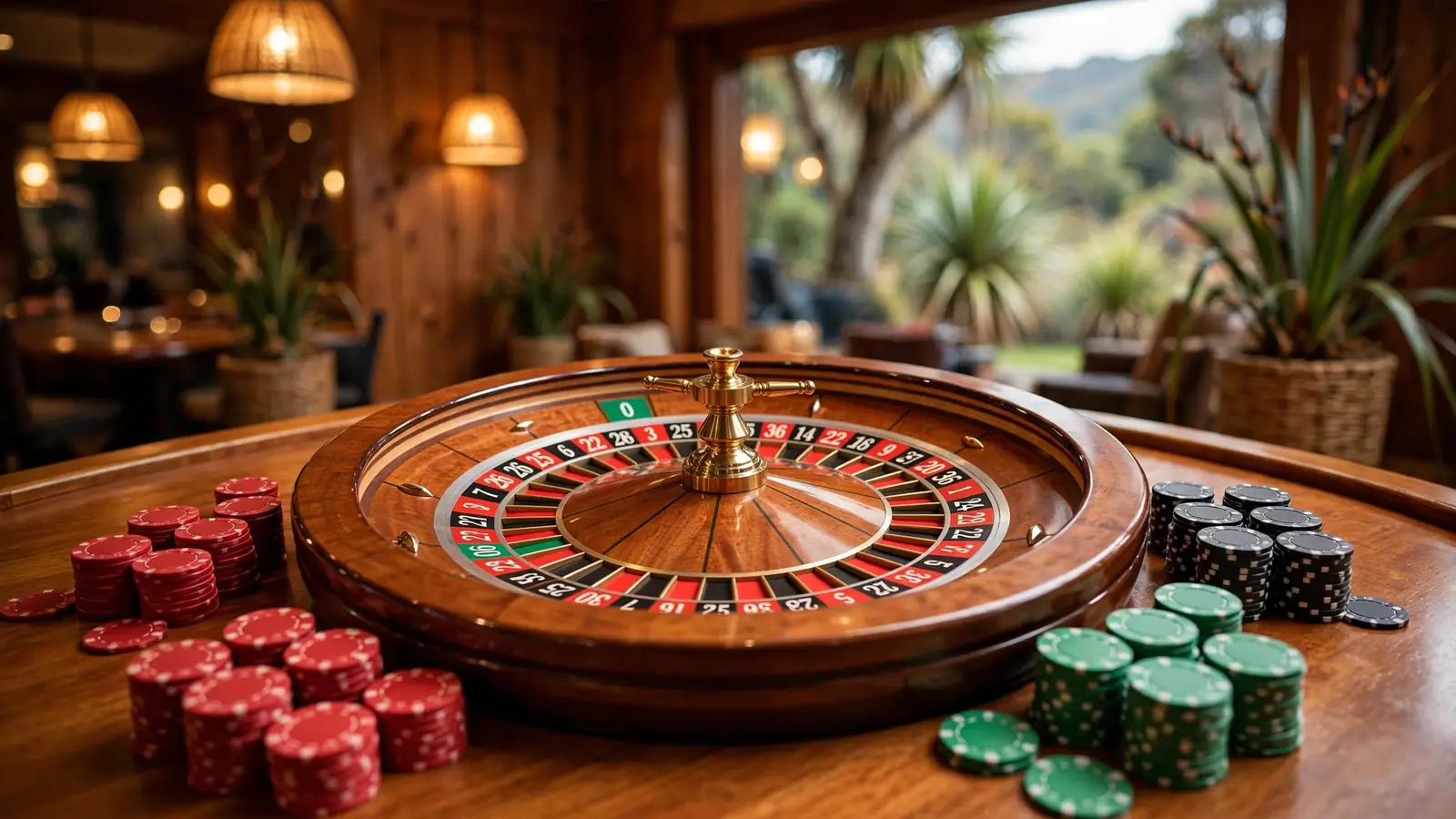
Once you place chips, the table has a set of bets to assess against the round’s result. You may have selected a single outcome or several categories. Each selection is considered separately. For instance, a number wager is concerned with whether the ball finishes in that numbered pocket; a colour wager concerns whether the result belongs to the chosen colour. A combination covers the numbers included in that selection. These are distinct ways of describing which outcomes your chips support.
The ball’s final position supplies the result. The numbered pocket in which it settles identifies the winning number. That number is then used to evaluate the wagers on the table. If a selection corresponds to the result, it qualifies as a winning bet; if it does not, it does not qualify. The outcome is not determined by the appearance of a chip or by how many positions you selected. What matters for settlement is the relationship between each bet and the pocket where the ball lands.
After that comparison, the table settles the winning selections. A qualifying bet is paid automatically, with the payment determined by the kind of wager you made. That means the settlement follows the bet category rather than treating every successful selection as identical. A bet on one number and a bet covering a group of numbers can both be successful when the result fits, but they remain different types of wager for payment purposes.
This order helps you read an automated table without confusing the bet display with the outcome. Chips show your selections; the ball’s resting pocket establishes the result; and the table checks which selections match before processing payment. The software presentation may make these steps appear close together, but they are separate parts of the round.
Roulette Round Process
Choose chip values and assign them to specific betting positions on the layout.
The ball settles in a numbered pocket, which establishes the winning number.
The table checks if the winning number matches the selected bets.
Qualifying bets are paid automatically based on the kind of wager made.
If the interface displays multiple chips or selections, read each position as its own instruction to the table. The final number can satisfy one selection, several selections, or none of them. The amount and category attached to each qualifying bet determine its settlement. You do not need to interpret the result from the chip layout alone: identify the pocket first, then compare it with the numbers or groups you selected.
What Changes When You Play Roulette with a Live Dealer
A live-dealer roulette table changes the format of the game, not the fact that it is roulette. You interact with a digital product, but the live-dealer label means the result is not produced by the RNG system used by software-based roulette. The distinction is about how the game is presented and how its result is determined; the word “automated” in a product name does not establish that every part of the game is generated by software.
This matters when you are comparing live casino auto roulette with a software table. Both may appear on a screen and allow you to take part remotely, but a similar interface does not make their result mechanisms identical. Live dealer products do not use an RNG system. That is the dependable distinction to use when interpreting the format, rather than assuming that an electronic display means an electronic result generator.
The label also does not tell you everything about the table. It identifies a live-dealer format, but it does not by itself establish which betting rules apply, how the interface is arranged, or whether a particular table is available to you. Those are separate details. A live label is not a complete specification of a product, and it should not be treated as evidence for features that are not stated.

“Auto roulette live” can therefore sound contradictory if “auto” is taken to mean that a computer determines the result. In practice, the terms can describe different parts of the experience: an online interface may handle interaction with the table, while the live-dealer product does not rely on an RNG system. The important point is not to infer the result source from the interface alone. Check whether the product is identified as live dealer or software-based, because those labels distinguish the relevant formats.
Nor does “live” mean that a table is automatically legal or available in New Zealand. The format describes the product, not its regulatory status or access conditions. A live-dealer label cannot confirm that a provider may offer the game to you, and it does not replace checking the applicable information about the service. Keep those questions separate: first identify what kind of roulette product is being described; then consider whether it is accessible and permitted in your circumstances.
This distinction is useful when a product uses several terms together. A table may be presented as automated because you use an online interface, while also being described as live because it is a live-dealer product. Those descriptions need not mean that the same component is automated. The interface can be digital without making the live result an RNG-generated one.
When you compare tables, treat “live dealer” as a format description and “RNG-based” as a description of a result mechanism. Do not assume that a live table follows a particular rule, runs on a particular schedule, or is available simply because its title includes “live.” These details are not established by the label itself. Separating the format from those other questions gives you a more accurate understanding of what the product description does—and does not—tell you.
A live-dealer label identifies the product format, but it does not confirm the provider’s legal authority to operate in New Zealand.
What Automated Roulette Software Can—and Cannot—Determine
In software-based roulette, a random number generator (RNG) is used to determine the game’s result. The software produces an outcome for a round; that outcome is not chosen by your bet selection. This is the central distinction between the result mechanism and the controls you use to participate.
The phrase “automated roulette” can describe more than one part of a product. It may refer to software generating roulette outcomes, or to electronic features that handle parts of the betting interface. Those features do not change what the RNG does. The generator determines the result; controls let you select or manage wagers. Treating both as one system can make a betting tool sound as though it has influence over the outcome when it does not.
What the RNG determines
For software-based roulette, the RNG is the mechanism used to produce the game outcome. It does not read a player’s choice of number, colour or other wager and then make that choice more likely to succeed. A selection describes the condition under which a bet would win; it does not direct the generator to produce a matching result.
This also explains why a prediction feature cannot be assumed to know what the software will generate next. A display may present past outcomes, calculations or suggested selections, but those are not the result itself. Without a reliable connection to the game’s actual outcome-generation process, a prediction remains an estimate, not control over the RNG. Betting software cannot turn a guess into a determination.

What betting software does not determine
The term automated roulette betting software can refer to tools that place or manage wagers according to settings chosen by a player. That is a different function from generating the roulette result. A tool may act on instructions about bets, but those instructions do not establish which outcome the game will produce.
The distinction matters when a product uses words such as “automatic,” “system” or “prediction.” Automatic actions may concern the interface or wager management. They should not be read as evidence that the software can forecast a future result or alter the RNG. A system that repeats selected bets, for instance, would still be making choices about wagers rather than determining the game’s outcome.
Electronic terminals and “semi-automated” play
An electronic roulette terminal may combine a screen or betting interface with software-based roulette. Calling such a setup semi-automated describes how a person interacts with it, not a separate method of predicting results. The relevant question is whether the roulette option is software-based: if it is, it uses an RNG to produce outcomes.
The label alone does not tell you exactly which tasks are automated. It may describe the terminal, the way bets are entered, or the broader game format. Do not infer from it that a terminal can anticipate results, improve a wager’s chance, or replace the RNG’s role. Separate the interface from the result mechanism: one handles player input, while the other determines the software game’s outcome.
Software Roulette Limits
- The RNG determines the result independently of player bet selections
- Prediction features are estimates and cannot control the RNG
- Betting software manages wagers but cannot forecast future results
- Electronic terminals use RNGs regardless of their interface labels
How to Place Bets and Use Auto-Play Controls
A roulette betting screen combines two separate actions: choosing where to wager and deciding whether to start each round manually or use an auto-play control. The bet choices determine what outcomes your wager covers. Auto-play, where available, changes how the game proceeds after you have selected those wagers; it does not turn a bet into a prediction or alter what you chose.
To place a bet, select a chip value and put the chip on the relevant area of the table. You can cover a specific number, choose red or black, or select odd or even. A wager can also cover a combination of numbers. Each placement defines which result would count as a win for that particular wager. The table layout is therefore part of the control: the chip’s position identifies the bet.
Before starting a round, check the table to make sure every chip is where you intend it to be. A chip placed on a number represents a different choice from one placed on a colour or parity option. If you change your selection, adjust the chips on the layout before play proceeds. This is a practical check on your input, not a way to influence which number will be selected as the result.
What auto-play changes
“What is auto-play roulette?” is best answered in terms of the interface. Auto-play is a control for beginning successive rounds without requiring you to press the ordinary start control each time. It concerns the repetition of play, not the meaning of the wagers. The table still uses the bets you selected; choosing auto-play does not add coverage to them or make them more likely to win.

The exact controls depend on the game interface. Read the on-screen instructions before activating the feature, particularly to understand whether your current chips are carried into subsequent rounds and what action stops the sequence. Do not assume that an auto-play button has the same settings in every version. If the screen does not make the effect clear, manual play leaves you in control of initiating each next round.
“Tricks” and bet choices
Advice described as auto-roulette tricks often mixes up two different things: arranging bets and controlling the interface. You can choose a single number, a colour, an odd-or-even option, or a combination of numbers, but none of those choices guarantees that the ball will land within the covered outcome. Repeating a wager automatically repeats your chosen action; it does not improve the wager or ensure a return.
A useful way to avoid accidental play is to review the chips before starting and confirm that the selected areas match your intended bets. If you use auto-play, also check that the repeated action is the one you mean to continue. These checks help prevent input errors, but they cannot remove the uncertainty of roulette.
Treat bet selection and auto-play as separate decisions. First decide what areas of the table to cover. Then decide whether to start rounds manually or use the available automatic control. Keeping those choices distinct makes the screen easier to interpret and prevents the label “auto-play” from being mistaken for a betting method.
Before Starting Play
- Verify that every chip is placed on the intended betting area
- Confirm that selected areas match intended bets
- Review auto-play settings to ensure the repeated action is correct
What a Roulette Auto-Spin Simulator Can Show
A roulette simulator with automatic spins can display a sequence of outcomes produced by software. Software-based roulette uses a random number generator (RNG) to determine outcomes, so a simulator can illustrate how generated results may vary from spin to spin. It can help you observe the output of a simulated roulette game without treating each spin as a manual action.
That sequence is a demonstration, not a forecast. Seeing a number appear repeatedly, or seeing a long run without it, does not make the simulator a reliable guide to what will happen next. The displayed history records outcomes already generated; it does not turn them into evidence that a future result is due or more likely.
A free roulette simulator, where one is available, can therefore be useful for exploring the idea of random outcomes without wagering. Its value is limited to what the software actually models. A simulation does not, by itself, confirm that a particular casino uses the same implementation, settings or interface. Nor does a run of simulated spins establish how a separate roulette product will behave.
The word “auto-spin” describes that the simulation can generate successive outcomes without requiring you to initiate each one manually. It does not mean that the software has discovered a pattern or can choose winning results. Automatic repetition changes how the demonstration proceeds, not what the RNG can tell you about an outcome that has yet to be generated.
If you are using a roulette simulator with auto-spin, read its output as a record of that simulation. It can show that sequences may contain repeats, clusters or gaps, but those features alone do not support a dependable prediction. The same caution applies when a simulator presents a history or summary: those displays describe generated results, not a promise about future ones.

A simulator can make the distinction between generated outcomes and predictions easier to see. It cannot remove randomness from software-based roulette, establish a winning approach, or guarantee that its results represent a particular casino’s game. Treat it as a way to observe a model, rather than as a tool for deciding what the next result will be.
Live Auto Roulette and La Partage: Separate the Format from the Rule
“Live” describes the format of a roulette product; it does not identify every rule applied at the table. Live dealer products do not use an RNG system. That distinction concerns how the product operates, not whether a particular betting rule is in effect.
La Partage is a named rule, so its presence should be established by the table’s stated rules rather than inferred from a label such as “live auto roulette”. The words “auto roulette” can point to an automated presentation or betting interface, while “live” indicates a live-dealer product. Neither label, by itself, confirms that La Partage applies.
Keep these descriptions on separate axes when comparing tables. One axis concerns the product format: live dealer or software-based. Another concerns the rules that determine how wagers are treated. A table can be described as live without that description answering questions about a specific rule. Likewise, a VIP label is not enough to establish a rule or change how a wager is settled.
Before relying on La Partage, look for it in the table’s rules or help information. Check that the wording applies to the particular table you are considering, rather than assuming that a rule mentioned elsewhere carries over. If the table information does not make the rule clear, treat its application as unconfirmed; do not use the product’s name or presentation as a substitute for the written terms.
Rule Verification
Do not assume La Partage applies based on a “live” or “auto” label; verify its presence in the table’s specific rules or help section.
This distinction prevents a common category error: a format label tells you what kind of product is being presented, while a rule label tells you how a specified betting situation is handled. The live-dealer description alone establishes neither the presence nor the absence of La Partage. To understand the table, assess its format and its stated rules independently.
What an Auto Bet Does After You Choose Your Wagers
An automatic bet does not change what counts as a win. It determines how a wager you have selected is handled when the result is settled. The payout depends on the type of bet, so the system must match the winning result against the selection on your betting layout before paying anything.
For a bet on a specific number, settlement depends on whether that number is the winning pocket. A colour selection is assessed against the colour of the winning number; an odd-or-even selection is checked against its corresponding category. A wager covering a combination is evaluated against the numbers or categories it includes. These are different conditions, even though each wager is settled automatically.
If your selection matches the result under its bet type, the winning wager is paid automatically. If it does not match, there is no winning payout for that wager. Automatic settlement is therefore about applying the selected wager’s condition to the outcome, not about changing the wager or improving its chance of winning.
The word “auto” can refer to different parts of a roulette interface. An automatic control may repeat chosen wagers across rounds, while automatic settlement processes a wager after a result is known. Those functions should not be treated as the same operation: repetition concerns whether a bet is placed again, while settlement concerns whether a placed bet qualifies for payment.

When checking an auto bet roulette feature, focus on what it automates. Your selections define the conditions for a win; the settlement function applies those conditions and pays qualifying wagers according to their type. It does not turn a losing selection into a winning one or make the result predictable.
Does Live Auto Roulette Use a 30-Second Spin Cycle?
A live roulette table does not use a random number generator to produce its result. That fact describes how the result is generated; it does not establish how long a round lasts or whether a particular table uses a 30-second cycle.
The distinction matters because timing and result generation are separate parts of the product. A countdown, if displayed, would indicate a time boundary in the table interface. It would not explain how the winning number is determined. Likewise, knowing that a live dealer product does not use an RNG does not tell you when betting opens or closes, how long the dealer takes to run a round, or how frequently new rounds begin.

So the phrase “30-second spin cycle” should not be treated as a general rule for live roulette. The interval may be a table-specific setting or description, but it cannot be inferred from the live-dealer format alone. Check the information shown for the particular table if its pace matters to you; do not assume that a timer or cycle length applies across all live products.
This also prevents a common mix-up in terminology. “Live” identifies a dealer-based product format, while “30 seconds” refers to a timing claim. Neither term supplies the other: a live table is not necessarily on a stated 30-second schedule, and a timing label by itself does not prove that a product is live.
When assessing a table, keep the two questions separate: what determines its result, and what timing rules govern its round. The established distinction is that live dealer products do not use an RNG system. A 30-second cycle is not part of that distinction, so it should be confirmed from the specific table’s displayed rules rather than assumed.
Prepared by the Casinospaymentshub editorial staff.