Live Dealer Roulette in New Zealand: Rules and Play
 Available in US
The guide explains how online casino regulation applies to live tables and covers formats, betting limits, odds, mobile play and interruptions.

Table of Contents
- How New Zealand’s 2026 Rules Affect Live Roulette
- What Free Live Roulette Can—and Cannot—Offer
- How an Online Live Roulette Table Reaches Your Screen
- What the Live Roulette Dealer Does During a Round
- Playing Live Roulette on a Smart Device
- Roulette Results, House Edge, and Betting Systems
- European and American Live Roulette: The Key Difference
- Low-Stakes Play and the Live Betting Clock
- Using a Live Roulette App When the Connection Fails
- Can You Win Consistently at Live Dealer Roulette?
How New Zealand’s 2026 Rules Affect Live Roulette
For Kiwi players, the important change in 2026 is not a separate rule for roulette. Live dealer tables fall within the wider regulation of online casino gambling, so their legal status depends on the operator’s position under New Zealand’s new licensing framework.
The Online Casino Gambling Act 2026 took effect on 1 May 2026, establishing the country’s first domestic licensing system for online casino gaming. Before that change, New Zealand had no local framework for licensing or supervising offshore online casinos. The Gambling Act 2003 also barred online casinos from being based in New Zealand. That did not prevent players from accessing offshore websites, and Kiwi players remain able to play live dealer games offered by international operators. But access to a site and its authorisation to serve customers under the new regime are different questions.
The Act permits a maximum of 15 licences for the online casino sector. A live roulette table does not sit in a special licence class of its own: it is covered by the same category as online pokies and digital table games. In practical terms, the licensing question concerns the operator’s authority to provide online casino gambling, rather than whether a particular table uses a physical wheel or a digital interface.
Use this list as a starting point when looking for live dealer roulette in New Zealand, and check each casino’s current table options before you play. The details below highlight only the information provided for each operator.
License: 07017519840 · Payout speed: 1-3 business days Zotabet is listed with licence number 07017519840. The supplied details do not confirm its live roulette offering, so check the available tables before you play.
Payout speed: 1-3 business days Lamabet lists payouts as taking 1–3 business days. The supplied details do not confirm its live roulette offering, so check the available tables before you play.
License: Tobique Gaming Commission, licence no. 0000002 Ricky Casino lists a licence from the Tobique Gaming Commission, number 0000002. Check the casino’s table selection to confirm whether live dealer roulette is available to you.
License: Tobique Gaming Commission, licence no. 0000064 Neospin lists a licence from the Tobique Gaming Commission, number 0000064. Check the casino’s table selection to confirm whether live dealer roulette is available to you.
License: Tobique Gaming Commission, licence no. 0000091 7Bit Casino lists a licence from the Tobique Gaming Commission, number 0000091. Check the casino’s table selection to confirm whether live dealer roulette is available to you.
License: Malta Gaming Authority, licence no. MGA/B2C/370/2017 Play Grand lists a Malta Gaming Authority licence, number MGA/B2C/370/2017. Check the casino’s table selection to confirm whether live dealer roulette is available to you.
Payout speed: 1-3 business days Wintino lists payouts as taking 1–3 business days. The supplied details do not confirm its live roulette offering, so check the available tables before you play.
License: Curaçao Gaming Authority, licence no. OGL/2024/165/0185 BitStarz lists a Curaçao Gaming Authority licence, number OGL/2024/165/0185. Check the casino’s table selection to confirm whether live dealer roulette is available to you.
License: Malta Gaming Authority, licence no. MGA/B2C/394/2017 N1 Casino lists a Malta Gaming Authority licence, number MGA/B2C/394/2017. Check the casino’s table selection to confirm whether live dealer roulette is available to you.
There is no Kiwi-specific gambling licence that offshore operators can rely on as a substitute for this system. Instead, New Zealand is moving from a period without domestic online-casino licensing to a regulated market in which operators must qualify for approval. The limit of 15 is a ceiling on licences, not a statement that every operator currently accessible to players will be approved.
The transition period
The change is being phased in rather than applied to every existing service at once. Online casinos that were already providing services to people in New Zealand before 1 May 2026 may continue operating during the transition, subject to the Act’s transitional provisions. This temporary permission does not mean that those operators already hold a New Zealand licence.
The key date for the transition is 1 December 2026. From then, only the approved operators within the new system will be legally permitted to accept New Zealand players. Operators that have not applied for a licence must stop serving the market by that date. A site that was accessible earlier in the year should therefore not be assumed to retain permission to operate after the transition deadline.
The rules also distinguish between an operator with an application awaiting a decision and one that has not applied. A pending applicant may continue operating while the Department of Internal Affairs considers its application, but it must not advertise during that period. If an application is declined, the provider must stop its online casino operations in New Zealand and leave the market. These conditions make an operator’s status subject to change while decisions are being made; a familiar website name alone does not establish its position.

The full licensed regime is not expected to be operational until 2027. That timing does not remove the December transition point. Rather, the new system has a defined interim period in which existing operators may continue under transitional rules, while the licensing process moves towards the later full regime.
What this means for live roulette
If you are considering online live dealer roulette, separate three issues: whether the game is offered, whether the operator can serve New Zealand players at the relevant time, and whether the operator is covered by the new licensing arrangements. The Act places live tables inside the online casino licensing category, so an operator cannot treat roulette as outside the rules merely because the game is streamed from a studio or casino elsewhere.
During the transition, an offshore platform may still be accessible to Kiwi players, but accessibility should not be confused with New Zealand approval. Before the new framework, offshore online casino services were not supervised by a New Zealand regulator, and a customer wagering with such a site had no domestic government recourse. The licensing transition changes the regulatory setting for operators; it does not turn every international site into a locally approved one.
Attention: Accessibility to an offshore platform during the transition period should not be confused with official New Zealand approval.
For a live roulette dealer casino, the relevant point is therefore the provider’s authorisation and status, not a special “roulette licence”. Operators serving New Zealand players must fit within the online casino framework, and the same category covers live dealer tables, online pokies and digital table games. As the transition proceeds, that distinction helps explain why a game that remains technically available may not necessarily be offered lawfully to New Zealand customers by every operator.
New Zealand’s 2026 rules are thus a change in who may serve the market, not a ban on Kiwi players accessing offshore platforms or a separate set of licensing rules for roulette. The transition date and an operator’s application outcome determine how its position changes.
What Free Live Roulette Can—and Cannot—Offer
Free play can help you understand the layout of a roulette game without risking money, but it does not follow that every live table has a free option. Live dealer games are typically not offered for free because operating a staffed table involves significant costs for the casino. A free mode may therefore be available for a digital roulette game while being absent from the live version.
That distinction matters when you are looking for free live dealer roulette. A game that looks like roulette and costs nothing to try may not be the same product as a live table. It could be a digital game rather than a session with a live dealer. The word “free” describes the cost to play; it does not, by itself, tell you how the game is run.

If a live table has a free-play setting, it can let you explore its controls and see how a round is presented without placing a cash stake. But free access is a feature of the particular table or casino, not something to assume across all live roulette games. If the table offers no such setting, searching for a “fun mode” or “challenge” option does not make one available. Those labels may describe different kinds of free or practice play, but the label alone cannot confirm that the table is live.
A free digital roulette game can still be useful for learning the basic sequence of making a selection and seeing an outcome. It cannot show you that a live table is free to play, nor can it guarantee that the live version has the same options or presentation. Treat each game’s own information as the guide: check whether it is explicitly identified as live and whether it says that play is free. If either point is unclear, do not infer it from the game’s name or appearance.
Free play also has a limited purpose. It can remove the financial stake from a practice session, but it does not reproduce every condition of paid play. In particular, it does not tell you what you would spend at a live table, because no cash stake is being placed. Nor does a practice result establish what a later result will be. A run of outcomes in free play is not a forecast for a paid session.
This is why “free roulette” and “free live roulette” should not be treated as interchangeable descriptions. The first may refer to a digital game that you can try without staking money. The second specifically implies a live-dealer game available without a cash stake, and that availability cannot be presumed. A site may show both kinds of roulette, but the presence of free digital play does not mean the live table has a free-play option.
- Check the game description for a live-dealer label
- Verify if the table explicitly allows free play
- Treat each game’s own information as the guide
- Assume a “free” label means the table is live
- Infer free access from a digital game’s presence
- Use a promotional label instead of checking conditions
The same caution applies to phrases such as “live dealer roulette free play.” They can describe what a player hopes to find, rather than a standard feature offered by every casino. Before starting, check the game description and the table’s available mode. If it requires a real-money stake, it is not free play, even if the stake is small or the session is presented as a trial. Do not treat a promotional label as a substitute for checking the actual conditions.
You may also encounter wording such as “spread bet roulette” alongside roulette offers. Do not assume that it means a free version of a live table. The phrase does not establish whether the game is live, whether it can be played without a stake, or what its rules are. Those details have to come from the specific game information. If the offer does not clearly state that the live game can be played for free, the safe interpretation is that free access has not been established.
A practical way to assess an offer is to separate three questions. Is the game roulette? Is it explicitly a live-dealer game? Can you enter it without staking money? A “yes” to the first question does not answer the other two. Likewise, a free practice option may be useful for exploring a game, but it should not be taken as evidence that the paid live table works identically in every respect.
The main limit is straightforward: live tables cost more to operate than a free digital practice game, so free access to a live table is not something to expect as standard. When it is not offered, a free alternative may still let you practise with roulette, but it does not turn that alternative into a live dealer session. Identify what is actually being offered before you play, and keep practice results separate from expectations about a later paid game.
How an Online Live Roulette Table Reaches Your Screen
A live roulette table reaches you through two connected parts: a physical game being broadcast, and an online interface that lets you follow the round and participate. The physical side is located in a studio or a casino in a particular country. A live video feed carries the table’s activity to the online casino, where it appears alongside the controls and information you need to place a bet.
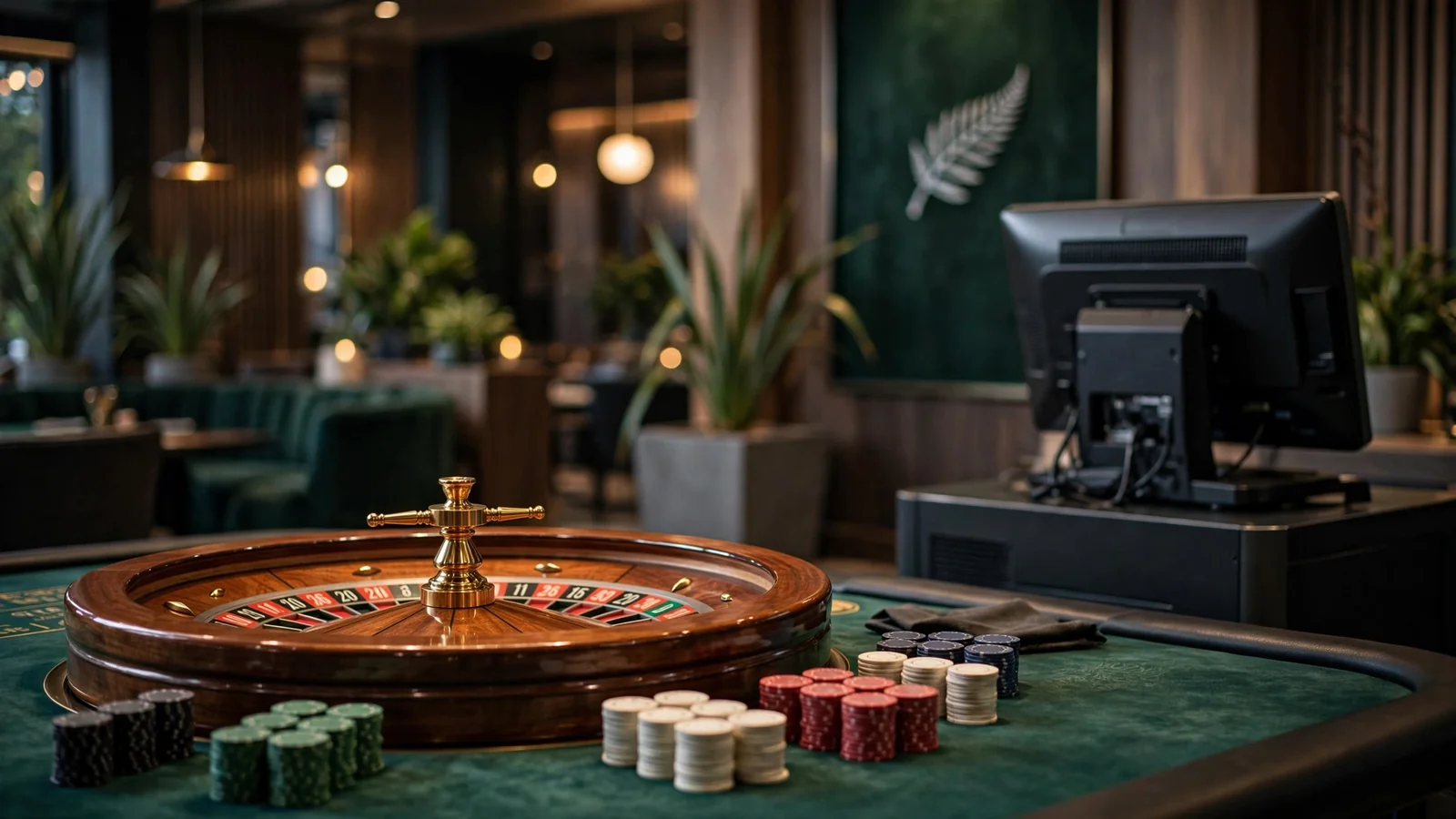
This differs from a digital roulette game, where software generates the round on a computer rather than showing a physical table in a live broadcast. In a live game, the image on your screen comes from an event taking place in real time. The interface is still software, but it is not a substitute for the physical game being shown.
The online casino connects those parts. It presents the broadcast and the betting interface together, so you can watch the live table while selecting your wager. The feed shows what is happening at the physical game; the interface provides a way to take part remotely. Both are necessary: a video alone would let you watch but not bet, while a betting screen without the live feed would not show the physical round.
This arrangement also explains why a live table can feel different from a standard online roulette game. In a digital game, the screen is built around a software-generated result. With online live dealer roulette, the screen combines live footage with digital controls. The broadcast is not simply an animation designed to resemble a casino; it shows a real table as the round unfolds.
The stream and the betting interface need to present the same round. If you see one event in the video but the controls refer to another, the online table would not be usable. The system therefore associates the table’s live activity with the game information displayed on the screen. You can follow the broadcast and use the interface in the context of that same live game.
The video also has a practical limit: it can only show what the camera captures. The online interface supplies the accompanying game information and betting controls, while the feed provides the visible connection to the physical table. These elements work together, but they do different jobs. The feed communicates the live scene; the software lets you interact with the game remotely.

When you choose an online casino live dealer roulette table, you are therefore accessing a broadcasted physical game through a digital service. The casino’s screen brings the live image and online controls into one view, but the table itself remains at the studio or casino sending the feed. Your device receives the broadcast and displays the interface; it does not create the physical round.
That distinction is useful when comparing live roulette with a digital table game. Both can be played through an online interface, but only the live version shows a real table in a real-time broadcast. The live experience depends on that connection between the physical venue, the video feed and the software that lets you participate.
What the Live Roulette Dealer Does During a Round
At a live roulette table, the dealer works with a physical wheel and ball rather than a software-generated representation of them. The table is set up in a professional studio, with the equipment arranged so the dealer can run the round consistently while players follow the action. The central difference from an RNG roulette game is the source of the result: a live round involves a real wheel in motion; an RNG game produces its result through software.
The dealer’s work follows a repeatable sequence. Before a round begins, the table is prepared and the wheel is checked as part of the studio’s operating routine. The dealer then sets the round in motion by spinning the wheel and releasing the ball in the opposite direction. While the ball travels, players can place their bets on the digital layout associated with the table. The dealer manages the physical action; the layout gives players a way to select their bets.
The dealer also signals when betting is open and when it has closed. That distinction matters because a live round has a physical sequence: bets must be accepted before the ball settles into a pocket. Once betting closes, the dealer does not keep the round open while players reconsider their choices. The wheel and ball continue, and the table moves towards a result.
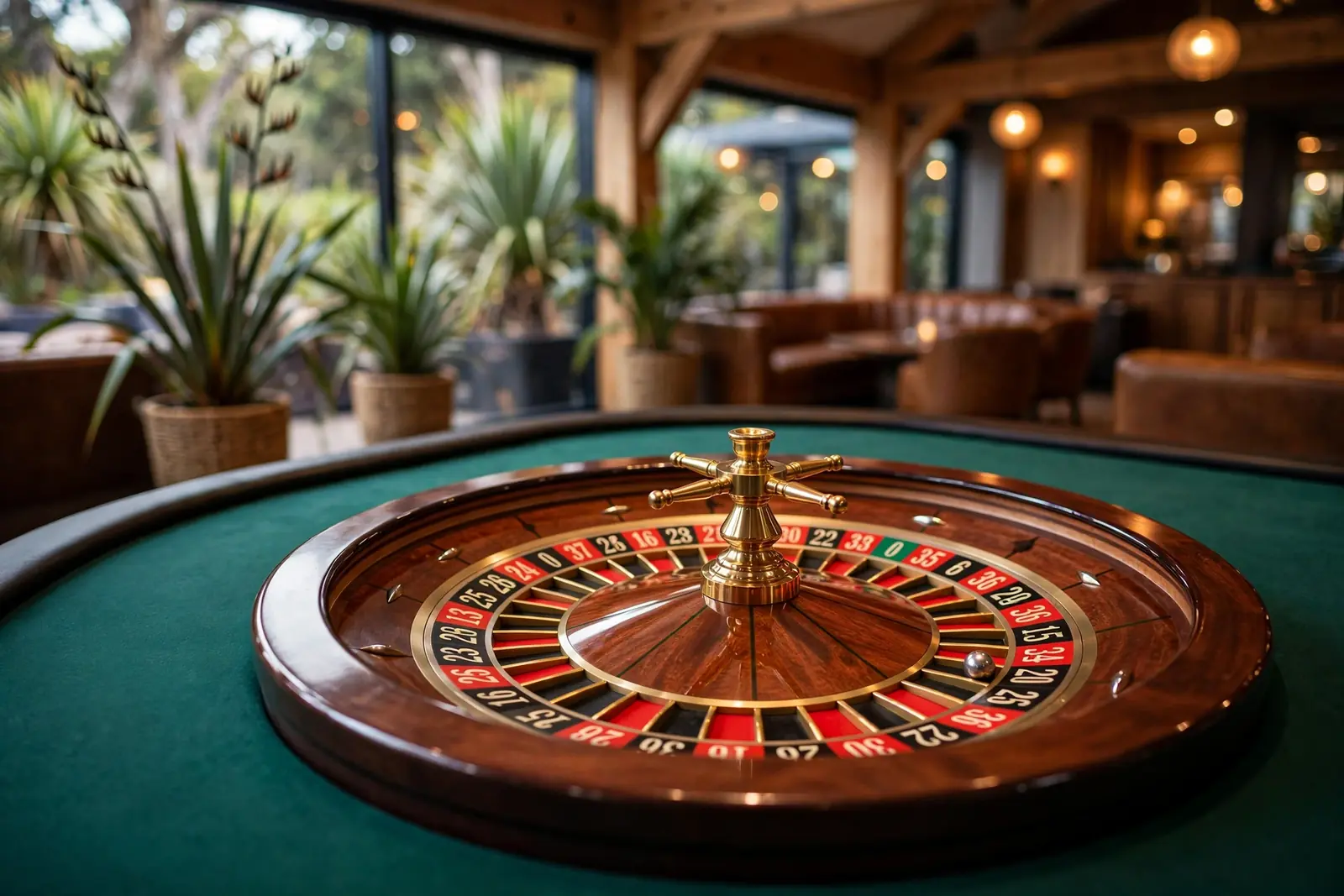
When the ball comes to rest, the dealer identifies the winning pocket and communicates the outcome. The result is then reflected in the game interface, so the physical event and the displayed round remain aligned. This is not the same as a dealer choosing the result. The wheel determines where the ball lands; the dealer conducts the round and reports what happened.
A professional live table is designed around clear, repeatable handling. The wheel must be visible, the ball must be released in a way that allows the round to proceed, and the dealer must keep the sequence understandable. The dealer’s presence is therefore functional, not merely decorative: it makes the physical process observable and gives the round a human operator. The studio setting supports that work, with real equipment rather than a virtual wheel standing in for it.
An RNG table works differently. Its roulette wheel and ball are visual elements on a screen, while software generates the outcome. A live dealer table shows a real wheel and a real ball being handled by a professional dealer. The interface may look similar in both formats, but the underlying process is not: one displays a software result, while the other presents the result of a physical spin.
The dealer does not remove chance from roulette or make the outcome predictable. Their role is to operate the table, maintain the round’s sequence and announce the result. Watching a dealer spin a real wheel can make the game feel more immediate, but the presence of a person does not change what determines the winning pocket. For Kiwi players, that is the practical distinction to keep in mind when choosing between a live table and an RNG version: the live format adds a real dealer and physical equipment, not control over the result.
Playing Live Roulette on a Smart Device
On a smart device, live roulette combines a video view of a real table with controls for taking part in the game. The feed shows the live dealer and table; the on-screen interface gives you a way to place bets and follow the round. These are connected parts of one experience, but they serve different purposes: the video presents the live table, while the controls let you act through the casino service.

The dealer interaction is another difference from playing a digital table game. You can engage with a professional dealer through the features provided at the table, while watching the round unfold on screen. The exact interaction tools can vary, so check what is available in the particular game rather than assuming every table offers the same options.
A smaller display can make it harder to keep the video and betting controls in view at the same time. Before joining a round, take a moment to locate the main controls and check how the table information is presented. If the screen feels crowded, changing the device’s orientation or adjusting the display may make it easier to see what you need. The aim is to understand the interface before you have to make a decision, not to navigate it while the round is already in progress.
Touch input also changes how you use the controls. Tap deliberately, then check that the interface reflects your intended action. A video image is not itself confirmation that a bet has been placed; use the table’s on-screen information to confirm what the system has registered. This distinction matters whenever you are watching the dealer and interacting with controls on the same display.
Playing on Smart Devices
- Locate the main controls on the screen
- Check how the table information is presented
- Adjust device orientation if the screen feels crowded
- Confirm that the interface reflects your intended action
Live roulette on a smart device still depends on the live feed and the table interface working together. The feed lets you watch and interact with a professional dealer; the interface carries your actions into the game. Getting familiar with both helps you follow the table without confusing what you see on screen with what you have actually submitted.
Roulette Results, House Edge, and Betting Systems
A live dealer roulette result is determined by where the ball lands, while your betting system determines how you stake your money. These are separate parts of the game. Changing the size or order of your bets can change how your balance moves, but it does not change the wheel’s probabilities or give you control over the result.
The house edge describes the casino’s statistical advantage across play. It is calculated from the rules and payouts, not from a prediction about what will happen in your next round. Over a long run, the edge affects the expected relationship between total stakes and returns. It does not mean that every player loses every session, or that a particular result is due after a run of other results. Short sequences can vary widely.
A roulette system may tell you to raise, lower or repeat a stake according to previous outcomes. That is a staking rule, not a way to alter the underlying odds. If a system increases stakes after losses, for instance, it can make the amount exposed grow while the result remains uncertain. A sequence of wins can also stop; the system cannot guarantee that it will continue.

Claims that a live dealer roulette system can beat the house edge need careful scrutiny. Ask what mechanism is supposed to change the probability or payout. If the explanation only rearranges stakes, it changes the pattern of possible wins and losses, not the mathematical advantage built into the game. A method may produce a different balance path, but that alone is not evidence of a better expected return.
When assessing live dealer roulette results, distinguish a recorded outcome from evidence of a dependable advantage. A short run can look persuasive by chance, and past spins do not provide a reliable signal for the next one. The house edge is a long-run measure; it is not a forecast for an individual round.
The practical use of the house edge is to understand the cost built into play, not to select a sequence of bets that promises to remove it. If you use a staking plan, treat it as a way to organise your choices and set limits on your exposure. Do not treat it as a prediction tool or as proof that losses can be recovered.
European and American Live Roulette: The Key Difference
The main mathematical difference between European and American live roulette is the house edge: the figures are around 2.7% for the European version and 5.26% for the American version. The higher figure means that, over the long run, the American game has a larger built-in cost relative to the amount wagered. The live dealer format does not remove that difference.
These percentages describe the game’s expected advantage for the operator across repeated play, not a deduction from every individual bet. A single result can differ sharply from the long-run expectation. The house edge does not tell you which number will come up in a particular round, nor does it mean that a short session will produce a loss matching the stated percentage.
Features a house edge of around 2.7%, representing a lower long-run mathematical cost.
Features a house edge of around 5.26%, which is a larger built-in cost relative to the amount wagered.
When comparing live tables, check which roulette variant is named. A table’s live video and dealer interaction do not, by themselves, identify its mathematics. The variant is the relevant detail for this comparison: European roulette carries the lower stated house edge, while American roulette carries the higher one. If two tables otherwise seem similar, that difference is enough to make their long-run mathematical cost unequal.
The figures should also be read as estimates, not as a forecast for your own results. “Around” matters: the percentages describe the usual house edge associated with each variant, rather than a promise about the outcome of a session. They are useful for comparing the games on the same basis, but they do not establish that a particular player will lose a specific amount or within a specific period.
If you are looking at a live roulette demo, identify the variant before treating it as a guide to the game’s cost. A demonstration of the live format is not a substitute for checking whether the table is European or American. The relevant house-edge figure follows the roulette variant, not the fact that a dealer appears on screen.
For a choice based specifically on mathematical cost, the comparison is straightforward: European live roulette has the lower house edge of the two. That does not guarantee a better result in an individual round; it indicates a smaller operator advantage over repeated play. American live roulette has the larger stated edge, so the difference remains relevant even when both games are presented as live dealer tables.
Low-Stakes Play and the Live Betting Clock
A live roulette round has a defined betting window. You can place or adjust bets while it is open; once betting closes, the table moves on to the spin and you cannot add a wager to that round. This limit is part of the pace of live play: rounds proceed faster when decisions have to be made within a set period.
For low-stakes play, the amount you plan to wager should be settled before the clock is running down. Decide what you want to place, check the table’s displayed betting options and minimum, then enter your selections while there is time to review them. The point is not to hurry. It is to avoid treating the final moments as time to work out a stake or change your mind.
The betting window can feel different from an offline game because the round continues on the table’s schedule. If you are still considering your choices when betting closes, the opportunity to participate in that round has passed. Waiting for another round is clearer than trying to force a decision at the last moment.
A small stake does not remove the need to follow the clock. If you want to keep the amount limited, determine it in advance and make sure the wager shown on screen matches your intention before confirming. Where the table offers several betting positions, choosing them under time pressure can make it harder to notice an accidental selection or an incorrect stake. A brief check before closure helps you distinguish what you meant to place from what is actually entered.
This is a practical form of live dealer roulette strategy, not a method for changing the game’s outcome. Preparation can make your decisions more deliberate, but it cannot make the betting window longer or ensure that a particular result occurs. If you are unfamiliar with the table layout, use a round to observe how the countdown and confirmation process work before committing to a wager.

The same approach applies whether your planned stake is small or larger: decide first, enter it carefully, and stop when the table closes betting. Live play is structured around repeated rounds, so missing one is not a reason to rush into the next. Wait until you can make the next choice clearly.
Using a Live Roulette App When the Connection Fails
A live roulette app depends on an active connection to the table’s video and game interface. If the picture freezes, the controls stop responding or the app disconnects, you may lose sight of what is happening. A specialist review notes that live dealer games can encounter technical problems; that possibility makes it useful to know how to check the state of a round before taking further action.
First, check whether the problem is limited to the video or whether the whole app has stopped responding. If the interface still works, look for the table’s current status and any message about the round. Avoid placing another bet simply because the feed has paused: the original action may still have been received. Check the bet display or account history before trying again.
If the app has lost its connection, confirm that your device is still online. You can then return to the table or reopen the app and check whether the live feed resumes. A reconnection does not necessarily mean that the round has paused; the table may have continued while your screen was unavailable. Use the information shown in the app to establish whether betting remains open and whether your previous bet was accepted. Do not assume that a repeated tap will cancel or replace an earlier action.
These are practical live dealer roulette tips for managing an interruption, not ways to affect the result. If the round’s status remains unclear, stop interacting with the table and contact the operator through its support channel. Keep any relevant account or round details available so the support team can identify the issue.
Before playing, it is also sensible to check that the app is current and that your connection is stable. This cannot prevent every interruption, but it can reduce avoidable connection problems. The key distinction is between restoring access to the live feed and confirming what happened to a bet: reconnecting addresses the first, while the table or account record must clarify the second.
Can You Win Consistently at Live Dealer Roulette?
A live dealer and a physical wheel do not create a way to predict where the next ball will land. The dealer runs the round; the wheel produces an uncertain result. You can win individual bets, but that is different from having a reliable method to win consistently over time.
The house edge describes the game’s mathematical advantage over many bets, not the outcome of a particular spin. In live European roulette, it is around 2.7%; in American roulette, it is around 5.26%. These figures mean that, across a large volume of play, the expected return to players is lower than the amount wagered. They do not mean that every player loses a fixed share, or that a particular session must end in a loss.
Short runs can differ sharply from that long-run expectation. A player may finish ahead after a small number of rounds, while another may lose quickly. Neither result shows that the game has become predictable. Past wins and losses do not tell you what the next spin will produce.
If you are looking for how to win live dealer roulette, the practical answer is to separate a possible short-term win from a repeatable advantage. The house edge remains built into the game, and no betting pattern can remove it. Set a spending limit you can afford, and treat any win as an uncertain result rather than evidence that you can keep reproducing it.
Can New Zealand players play real-money live dealer games at offshore casino sites?
Yes, New Zealand players can access live dealer games at international sites. From 1 December 2026, however, only operators approved under the new system may legally accept New Zealand players; check an operator’s status with the Department of Internal Affairs.
Do live dealer games have a house edge?
Yes. Live European roulette usually has a house edge of about 2.7%, while American roulette is around 5.26%.
What changes on 1 December 2026?
From that date, only operators approved under New Zealand’s new online casino system may legally accept New Zealand players. Operators that have not applied must stop serving the market.
How do live casinos work?
Live casino games stream real-time video from a studio or casino, where professional dealers use real equipment such as cards and roulette wheels. You place bets online during set betting windows and watch the game unfold.
What causes live casino disconnections?
Live dealer games can experience technical problems, which may interrupt your connection or the game.
Published by the Casinospaymentshub team.