Playing Keno in New Zealand: How Draws Work
 Available in US
See how selected numbers are compared with a draw, and how schedules, access options and prize tables fit into playing Keno.

Table of Contents
- How a Keno Draw Produces Hits
- How Many Numbers Must You Match to Win?
- How to Enter a Keno Draw Before It Closes
- Keno in New Zealand: Draw Schedule and Online Licensing Context
- Playing Keno Daily: Retail, App and Website Access
- How to Read a Keno Prize Table
- Keno Payout Charts: What They Can and Cannot Tell You
- Why Past Keno Winners Do Not Predict the Next Draw
- Does Keno Work Differently Online?
- What Determines the Maximum Keno Win?
How a Keno Draw Produces Hits
A Keno result is formed by comparing your selected numbers with the numbers produced by the draw. Keno uses a pool of 80 numbers, and each draw produces exactly 20 of them. A hit is a number that appears both in your selection and in the draw.
It helps to treat the two groups as sets. Your selection is one set; the drawn numbers are another. Their overlap is the set of hits. A selected number that does not appear in the drawn group is not a hit. A drawn number that you did not select does not add a hit to your result. The comparison is about membership in both groups, not how close two numbers are or where they appear on a ticket.
For instance, imagine that some of your selected numbers also appear among the 20 drawn numbers, while the rest do not. The shared numbers are the hits. This way of thinking works regardless of how many numbers you selected: each selected number can be checked against the draw, and the matching ones make up the overlap. The draw still contains 20 numbers from the pool of 80; changing your selection does not change what the draw produces.
The terms “selected” and “drawn” describe different parts of the process. You choose a group from the available pool. The draw then produces its group from that same pool. A hit is not a separate event that adds another number to the draw. It is the result of comparing the groups after the draw has been made.
This distinction also prevents a common misunderstanding: the draw does not produce a personal set of numbers for each player. It produces the draw result, and each player’s result depends on how that shared draw overlaps with their own selection. If two players select different numbers, the same drawn group can produce different sets of hits for them. If they select the same numbers, the comparison with that draw is the same.


The number of drawn numbers is fixed at 20. The number of numbers you select is a separate part of the game. Keeping those two quantities distinct makes the mechanics easier to follow: the draw supplies one group, your entry supplies another, and the hits are the numbers common to both. The draw’s size does not expand or shrink to match your selection.
A draw can therefore be understood without treating every number as a separate prize or assuming that a hit means a win. At this stage, “hit” has a narrow meaning: a selected number is present in the drawn group. It describes the match itself, not what that match is worth or whether the overall result qualifies for a particular outcome. Those questions depend on how the game evaluates the result, rather than on the definition of a hit.
When you think about how Keno works in New Zealand, begin with this comparison. There are 80 possible numbers in the pool, 20 numbers are drawn, and your hits are the numbers shared by the draw and your selection. That is the core mechanism. It gives you a clear way to read a result without confusing the numbers you chose with the numbers the draw produced.
The same logic applies whether you describe the outcome from the draw’s side or from your side. Starting with the draw, you ask which of its 20 numbers are also in your selection. Starting with your selection, you ask which of your chosen numbers appear in the draw. Both checks identify the same overlap. Nothing about the wording changes the result; only the two groups being compared matter.
This is why a Keno result is more than a list of drawn numbers. The list shows the draw, but it does not by itself show how your entry performed. To identify hits, you need to compare that list with the numbers you selected. Once you do, every shared number is a hit, and every number present in only one group is not.
In Keno, a hit is simply a match between a selected number and a drawn number. It describes the match itself, not the payout or whether the result qualifies as a win.
How Many Numbers Must You Match to Win?
There is no single hit count that defines a win for every Keno selection. Your result depends on two things together: how many numbers you selected and how many of those selections match numbers drawn. A hit is a match between one of your choices and a drawn number. The payout rules evaluate that hit count in the context of your selected-number count.
In Keno, you can select from one to ten numbers. Each selection size creates a different set of possible hit outcomes. If you choose a small set, there are fewer selected numbers available to match; if you choose more, the result is measured against a larger set. For that reason, “how many numbers must you match?” cannot be answered with one fixed figure that applies to every ticket.
Suppose two entries record the same number of hits. That does not, by itself, establish that they have the same result. If the entries began with different numbers of selections, the same hit count is being assessed against different selection sizes. The relevant question is not only how many matches appeared, but how many appeared among the numbers you chose. Payouts depend on both parts of that comparison.
The prize increases as more of your selected numbers match drawn numbers. This makes the number of hits important, but it does not mean that a particular hit count guarantees a prize regardless of selection size. Nor can you infer a precise prize from the hit count alone. The applicable outcome is determined by the relationship between the selection size and the recorded matches.


What your selection size changes
The number you select sets the frame for interpreting your result. With one selected number, a hit means that your sole choice matched. With a larger selection, the same count of hits represents a different proportion of the numbers you entered. That proportion can help you describe the result, but it does not replace the payout rules: Keno payouts are based on the actual selection size and hit count, not on a general impression that a result was close.
This is why choosing more numbers should not be treated as an automatic way to win more. A larger selection changes the possible combinations of hits and the way an outcome is assessed. It does not ensure that more of your choices will be drawn, and it does not make any particular hit count universally valuable. You need to consider the selection and the result together.
For instance, if you are comparing two outcomes, first note how many numbers were selected for each. Then note the hits for each entry. Only after both are known can you identify the relevant outcome category. Looking at hit counts while ignoring the selection size leaves out part of the information that determines the payout.
Hits and the meaning of “winning”
People may use “win” to mean that an entry received a prize, while others may mean that it returned more than its cost or produced a particular payout. Those are not interchangeable definitions. A hit is simply a match; it does not, by itself, tell you the amount paid or whether the entry met a particular personal definition of success. The selection size and the applicable prize rules still matter.
- Consider the selection size and hit count together
- Use the applicable payout rules for your specific selection size
- Assume a fixed hit count guarantees a win regardless of selection size
- Infer a precise prize from the hit count alone
So, if you are asking how many numbers you must match to win Keno NZ tonight, the accurate answer is that there is no universal hit threshold to apply without knowing how many numbers you selected and how the relevant prize rules treat that result. The same principle applies when you ask how much you can win: the hit count alone is not enough to calculate an amount. A payout depends on the number selected and the number matched.
This also clarifies how to think about a strategy. Selecting a different number of numbers changes the conditions against which your result is assessed; it does not provide a method for controlling the draw. No selection size turns a hit into a guaranteed prize. The practical way to assess any completed entry is to identify its selection size, count the matching selections, and then consult the applicable prize information for that combination.
Do not confuse a high hit count with a result that can be evaluated in isolation. A result with several matches may sound strong, but its payout cannot be established just by describing the count. Conversely, a low count cannot be labelled a loss or a prize outcome without applying the rules for that selection size. The count matters, but it is one input rather than a complete answer.
When you compare entries, keep the two variables visible: numbers selected and hits recorded. That avoids the common error of treating one number of matches as a universal winning line. It also keeps the distinction clear between matching numbers and receiving a particular payout. The number of hits describes what happened; the selection size determines the context in which that result is assessed.


How to Enter a Keno Draw Before It Closes
To enter a Keno draw, you need to make a selection and submit it for a particular draw before that draw’s entry window closes. The key practical detail is the cutoff: an entry closes at the scheduled draw time. A selection that has not been entered by then cannot be treated as an entry for that draw.
Keno NZ tickets can be placed through an official lottery retailer, a mobile app or a website in a region where tickets are legally sold. A specialist review describes these as available routes; access can depend on where you are and on the channel you use. This is not a claim that every retailer, app or website offers Keno, or that each option is available in every region.
A practical entry sequence
First, decide which draw you intend to enter. The draw time is also the entry deadline, so identify the relevant draw before submitting anything. If you are using a digital service, make sure the entry is for the intended draw rather than assuming that a selection is automatically carried forward.
Next, make your number selection through the route you are using. At a retailer, follow the available ticket-entry process and state or mark your selection as required there. In an app or on a website, use the Keno entry process presented by that service. The exact interface may differ, so do not assume that buttons, ticket formats or confirmation screens are identical across channels.
Enter a Draw
Decide which draw you intend to enter and note the scheduled draw time, which serves as the entry deadline.
Choose your numbers through an official lottery retailer, mobile app, or website.
Complete the submission process before the cutoff and keep your ticket or digital confirmation as a record.
Before completing the entry, check that the selection and draw shown match what you intended. This is a useful distinction: choosing numbers is not, by itself, the same as having an entry accepted for a draw. The entry needs to be submitted through the retailer or digital service. Keep any ticket or digital confirmation provided, since it is the practical record of the entry you made.
Leave enough time to complete the process before the scheduled cutoff. Starting at the draw time is too late: entry closes then, not after the draw has begun. If a retailer is busy or a digital service takes time to complete an entry, that can leave you without a submitted ticket for the intended draw. Do not rely on being able to add or change an entry once the cutoff has passed.
If you miss the deadline, the straightforward next step is to select a later draw and submit a new entry before its own scheduled close. Do not assume a missed entry transfers automatically. Whether an entry can be changed or cancelled before closing depends on the process offered by the retailer or service; check its instructions rather than treating that option as universal.
The same basic timing rule applies whichever entry route you use: the scheduled draw time marks the close. The route determines how you submit the selection, while the deadline determines whether it can be entered in time. This separation helps avoid a common mistake—having numbers ready but not completing the submission before the draw closes.

Keno in New Zealand: Draw Schedule and Online Licensing Context
Keno NZ has four scheduled draws each day: 10 am, 1 pm, 3 pm and 6 pm. The times give you a fixed daily timetable for the game; they do not mean that a draw is available continuously between those points. If you are planning around a particular draw, use its scheduled time as the reference point. Keno NZ is drawn four times daily, so the same schedule applies across the day rather than being limited to a single evening draw.
That timetable is separate from New Zealand’s changing framework for online casino gambling. Keno’s draw schedule describes when the game is drawn; the online casino licensing framework concerns the legal conditions for providers offering online casino gambling. The two subjects should not be treated as interchangeable simply because both involve online play.
The Online Casino Gambling Act 2026 established New Zealand’s first domestic licensing framework for online casino gaming and took effect on 1 May 2026. Its transition period runs from that date to 1 December 2026. During this interval, providers that were already serving people in New Zealand before the Act took effect may continue operating under the transitional provisions. Those providers must stop conducting online casino gambling in New Zealand by 1 December if they have not applied for a licence. The full licensed regime is expected to be operational in 2027.
A specialist review describes the licensing process as underway. That is a time-sensitive description of the transition, not a permanent feature of the Keno draw timetable. The framework also changes the legal position from the period before the Act: previously, online casinos based outside New Zealand were not licensed or supervised by a New Zealand regulator, and customers using offshore websites had no domestic government recourse.
The primary regulator of gambling that oversees the online casino licensing framework.
The body that hears casino licensing applications, decides them, and approves changes to licence conditions.
New Zealand’s regulatory responsibilities are divided between two bodies. The Department of Internal Affairs is the primary regulator of gambling and oversees the online casino licensing framework. The Gambling Commission hears casino licensing applications, decides them and approves changes to licence conditions. In other words, the Department provides the principal regulatory oversight, while the Commission performs the application and licence-condition functions assigned to it.
The Gambling Act 2003 does not permit online casinos to be based in New Zealand, and domestic online casinos are prohibited. The 2026 Act introduces a domestic licensing regime for online casino gaming, but that does not mean every online gambling product is itself a casino or that the licensing timetable changes when Keno NZ is drawn. Keep the practical and regulatory timelines distinct: the Keno schedule is four daily draw times, while the licensing framework is moving through a transition with its own dates and responsibilities.
Playing Keno Daily: Retail, App and Website Access
Choosing where to play keno in New Zealand in 2026 is easier when you can check the details that matter to you before signing up. Use these operator notes as a starting point for your own checks.
License: 07017519840 · Payout speed: 1-3 business days Zotabet lists licence number 07017519840 and a payout speed of 1–3 business days. Check whether those details suit your needs before you play.
Payout speed: 1-3 business days Lamabet lists a payout speed of 1–3 business days. You can use that stated timeframe as one detail to consider.
License: Tobique Gaming Commission, licence no. 0000002 Ricky Casino lists a licence from the Tobique Gaming Commission, licence no. 0000002. You can consider this licensing information as part of your checks.
License: Tobique Gaming Commission, licence no. 0000064 Neospin lists a licence from the Tobique Gaming Commission, licence no. 0000064. You can review this detail when assessing the operator.
License: Tobique Gaming Commission, licence no. 0000091 7Bit Casino lists a licence from the Tobique Gaming Commission, licence no. 0000091. This gives you a specific licensing detail to check.
License: Malta Gaming Authority, licence no. MGA/B2C/370/2017 Play Grand lists a Malta Gaming Authority licence, no. MGA/B2C/370/2017. You can take this information into account when reviewing the operator.
Payout speed: 1-3 business days Wintino lists a payout speed of 1–3 business days. You can consider that stated timeframe when deciding where to play.
License: Curaçao Gaming Authority, licence no. OGL/2024/165/0185 BitStarz lists a Curaçao Gaming Authority licence, no. OGL/2024/165/0185. You can check this licensing detail as part of your assessment.
License: Malta Gaming Authority, licence no. MGA/B2C/394/2017 N1 Casino lists a Malta Gaming Authority licence, no. MGA/B2C/394/2017. You can use that stated licence information in your review.
To take part in Keno NZ, the route you use matters: a retail ticket, a mobile app and a website are separate ways of accessing the game, and the options available to you depend on where tickets may legally be sold. A specialist review describes these three channels—an official lottery retailer, a mobile app or a website—as ways to place a Keno bet in an eligible region. Treat that as a description of reported access, not a guarantee that every channel is available in every location.
At a retailer, you make your selection through the shop’s Keno service. If you use a digital route, the selection is entered through the relevant app or website. The channel changes how you submit your bet; it does not, by itself, establish that a particular casino’s mobile service includes Keno NZ. Check that the game is actually offered in the service you are using before relying on it being available there.

This distinction matters because Keno NZ and an online casino are not interchangeable products. A specialist review notes that casino operators do not all provide an app, and that the games available on mobile can differ. An app may provide access to a casino’s own games without including Keno NZ. Conversely, a Keno service accessed through a lottery retailer’s app or website should not be assumed to be a casino game simply because it is used on a phone.
The same separation applies to websites. A mobile-friendly site may let you use a browser rather than install an app, but that does not establish that Keno is offered there. Identify the service first, then check whether it provides Keno NZ in your location. Do not infer game availability from an app-store listing, a casino’s general mobile access or the fact that another service offers Keno.
There is also a regulatory distinction between lottery access and the online casino licensing framework. The Department of Internal Affairs oversees that framework. The Gambling Commission handles the issue of online casino licences and approval of changes to licence conditions. Those roles describe oversight and licensing responsibilities; they do not mean that every app or website carrying gambling games is a licensed Keno NZ channel. Nor does a casino licence, by itself, tell you which games appear in its mobile version.
Attention Access to Keno NZ depends on the specific service and your location; do not assume that retail, app, and website options are identical or universally available.
For a daily Keno routine, choose the access route by checking the specific service and its available game, rather than assuming that retail, app and website access are identical. A retailer, lottery-operated digital channel and casino app can have different offerings. The relevant question is whether Keno NZ is available through the particular channel where you are located.
How to Read a Keno Prize Table
A Keno prize table links a result to its prize. To read one, identify the number of numbers selected for the play, then find the entry for the number of those selections matched in the draw. The relevant outcome is the combination of these two details, not either detail on its own.
A table may show selected-number counts along one side and hit counts across the top, or arrange them the other way around. Read its labels before looking for a prize: locate the row or column for your selection size, then follow it to the hit count recorded for your entry. The point where those labels meet gives the result listed for that combination. If the table uses different labels or a different layout, use its key rather than assuming the arrangement.
The number you selected and the number of hits are separate parts of the lookup. A hit count alone does not identify a prize, because Keno payouts depend on both the hits and the number of numbers selected. The same count of hits can therefore correspond to different entries in the table for different selection sizes. Do not take a result shown for one selection size and apply it to another.

More selected numbers matching the drawn numbers increases the prize in Keno. That relationship does not make a single hit count a universal prize threshold: the relevant table entry still depends on how many numbers you selected. Read across the appropriate selection category, rather than treating a higher hit count as a complete description of the result.
Check whether you are reading the table for the same game and entry conditions as your play. A prize table is useful only when its labels correspond to the selection and hit categories that apply. If a heading, row label or note is unclear, do not infer what it means from a nearby value; consult the explanation attached to that table. A number without its row and column context is not enough to identify a prize.
A table also separates the outcome from the draw itself. It does not tell you which numbers will appear; it tells you how the recorded result maps to a prize. First establish the selection category and hit count, then read the corresponding entry. This keeps the lookup tied to the actual result instead of relying on a general claim about what a particular number of hits should pay.
When comparing Keno prizes in New Zealand, use the table as a structured reference, not as a promise that the same hit count has the same value for every selection. The number selected sets one part of the lookup, and the hits set the other. If either is read incorrectly, the prize entry may be misidentified.
How to use a prize table
Locate the row or column for your selection size, then follow it to the hit count recorded for your entry. The point where these two labels meet indicates the result listed for that specific combination.
Keno Payout Charts: What They Can and Cannot Tell You
A Keno payout chart connects a game outcome with the payment assigned to it. To read one, first identify the number of selections covered by the chart, then find the outcome category that corresponds to the hits recorded. The payout depends on both: the same hit count does not necessarily mean the same return when the number of selected numbers differs.
A chart is therefore a reference for interpreting an outcome, not a prediction of what you will receive before a draw. It cannot tell you which numbers will be drawn, whether your selection will match them, or how often a particular result will occur. Each entry describes a possible result under the chart’s stated conditions.
Check what those conditions are before relying on a figure. The chart should make clear which game and selection size it applies to, and how the displayed payout relates to the amount staked. If those details are unclear, a number on the chart may not be comparable with the amount you entered. Do not assume that two charts use the same basis just because they show similar hit categories.
A chart also needs to be current for the game being played. The phrase “today’s chart” is useful only if the information is dated or otherwise clearly tied to the applicable terms. An old image or an unattributed table may not reflect the payout information currently in force. Where no current chart and exact figures are available, it is not possible to state a reliable payout amount from the chart alone.

Use the chart to understand how its listed outcomes relate to payouts, and read its labels and conditions as part of the information—not as fine print that can be ignored. It does not establish that a particular outcome is likely, nor does it make a payout certain before the result is known. If a figure is presented without enough context to identify the selection and stake it applies to, treat it as incomplete rather than filling in the missing terms yourself.
Why Past Keno Winners Do Not Predict the Next Draw
A record of past Keno NZ results describes draws that have already happened. It can show which numbers appeared in those results, but it cannot establish which numbers will appear next. Each draw is an independent random event, so the frequency of a number in earlier draws does not change its probability in a future one.
This distinction matters when you look up past winners or number-frequency summaries. A number that has appeared often may seem “due” to appear again, while one seen less often may seem overdue. Neither impression follows from the draw process. Previous appearances do not build up a number’s chance, and previous absences do not create a debt that a later draw must repay.
Frequency records can still answer a historical question: how often did a number appear in the results being examined? They cannot answer a predictive question: which number will be drawn next? Those are different uses of the same information. Treating a description of past results as a forecast confuses what has been observed with what remains random.
Random Independence
Each Keno draw is an independent random event, meaning past results and number frequencies cannot predict future outcomes.
The same limit applies to a list of winning results. It may help you check a completed draw or review earlier outcomes, but a past winning combination does not make that combination more likely to recur, nor does a non-winning combination become more likely because it has not appeared. No pattern in a historical list overrides the independence of the next draw.
If you choose numbers using past records, the records do not improve the probability of a number appearing in the next draw. If you choose without consulting them, the same principle applies: the next result is not influenced by how you made your selection. A frequency table can organise history, but it is not a mechanism that changes future outcomes.
Use past results as a record, not as a signal. They tell you what was drawn before; they do not provide a reliable way to identify future winners.

Does Keno Work Differently Online?
The reported difference is how many numbers you can select. One description of standard Keno gives a range of one to ten numbers, while a separate description of online Keno gives a range of four to twenty. Those ranges do not agree, so they should not be combined as though they were a single, consistent rule.
If the online range applies to the game you are viewing, it allows selections outside the standard range described above: fewer than four numbers would not be available, while selections above ten would be. But the conflicting descriptions mean you cannot assume that every online Keno game uses that range. The selection options shown for the specific game are the practical detail to check before choosing numbers.
This difference concerns the permitted size of your selection. It does not, by itself, establish that online Keno uses a different method for determining results. Nor does a wider selection range mean that an online game is otherwise identical to every standard Keno version. The available descriptions settle only the stated ranges, not every rule that might vary between games.
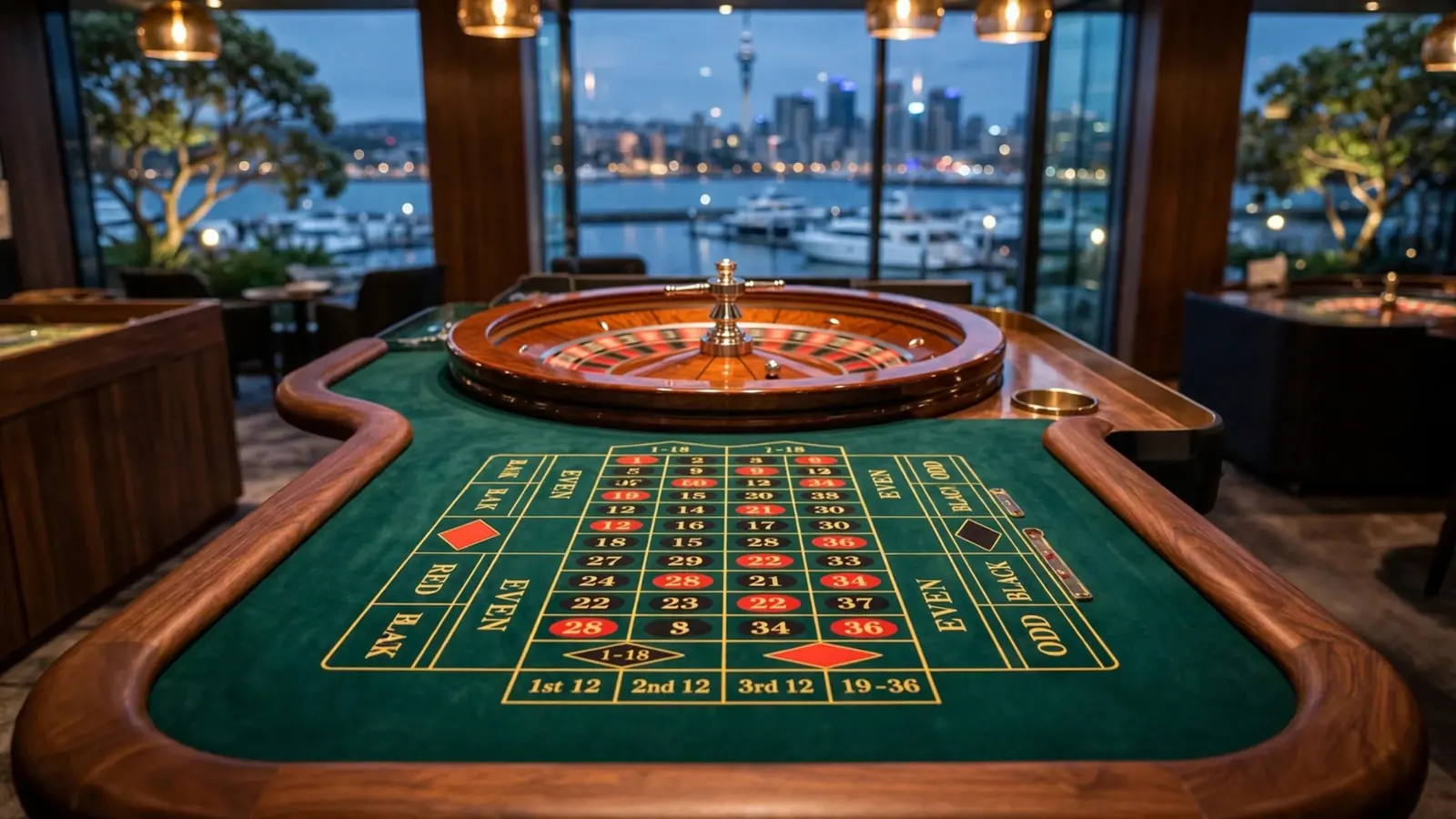
To understand how Keno works in New Zealand, separate the selection rule from the draw and the payout rules. The number of selections you are allowed to make determines the set of options available to you; it does not resolve the disagreement about which range applies. Check the game’s displayed rules before entering, especially if its selection controls offer numbers outside the one-to-ten range described for standard Keno.
What Determines the Maximum Keno Win?
There is no maximum Keno win in New Zealand that can be calculated from the selection rules alone. A payout depends on two linked details: how many numbers you selected and how many of those numbers appear in the draw. A prize increases as more of your selected numbers match, but that relationship does not reveal the amount payable.
To identify a maximum, you would need a complete payout schedule for the relevant game and wager. The schedule would show the payment attached to each combination of selection size and hit count. Without those amounts, knowing that a result contains many hits is not enough to calculate its value. Nor does the largest possible number of matches, by itself, establish a cash maximum.

This distinction matters when comparing different entries. The same hit count can lead to different outcomes when the selections differ, because payouts are tied to both the number picked and the number matched. A headline prize or isolated payout figure would not establish the maximum across all possible entries unless its conditions and the rest of the schedule were clear.
You can therefore assess the structure of a result from the selection and hit counts, but you cannot derive a maximum win from those counts alone. Treat any stated maximum as meaningful only when it is linked to the applicable game, selection size, wager and payout rules. Without that context, the figure cannot show what a particular Keno entry could pay.
How do you play Keno in New Zealand?
Choose between one and ten numbers, then compare your selection with the 20 numbers drawn from a pool of 80. The numbers appearing in both groups are your hits; you can enter through a retailer, mobile app or website where Keno tickets are legally sold. Entries close at the scheduled draw time.
Does a number being “hot” or “cold” affect its chances in the next Keno draw?
No. Each draw is independent, so how often a number appeared in the past does not change its chance of appearing next.
Do these numbers improve my odds?
No particular numbers are more likely to be drawn; each draw is independent. Your selection size affects the possible hit outcomes and how payouts are assessed.
What time is the Keno draw held?
New Zealand Keno draws are held four times daily, at 10 am, 1 pm, 3 pm and 6 pm.
Published by the Casinospaymentshub team.